
Category: East Asia
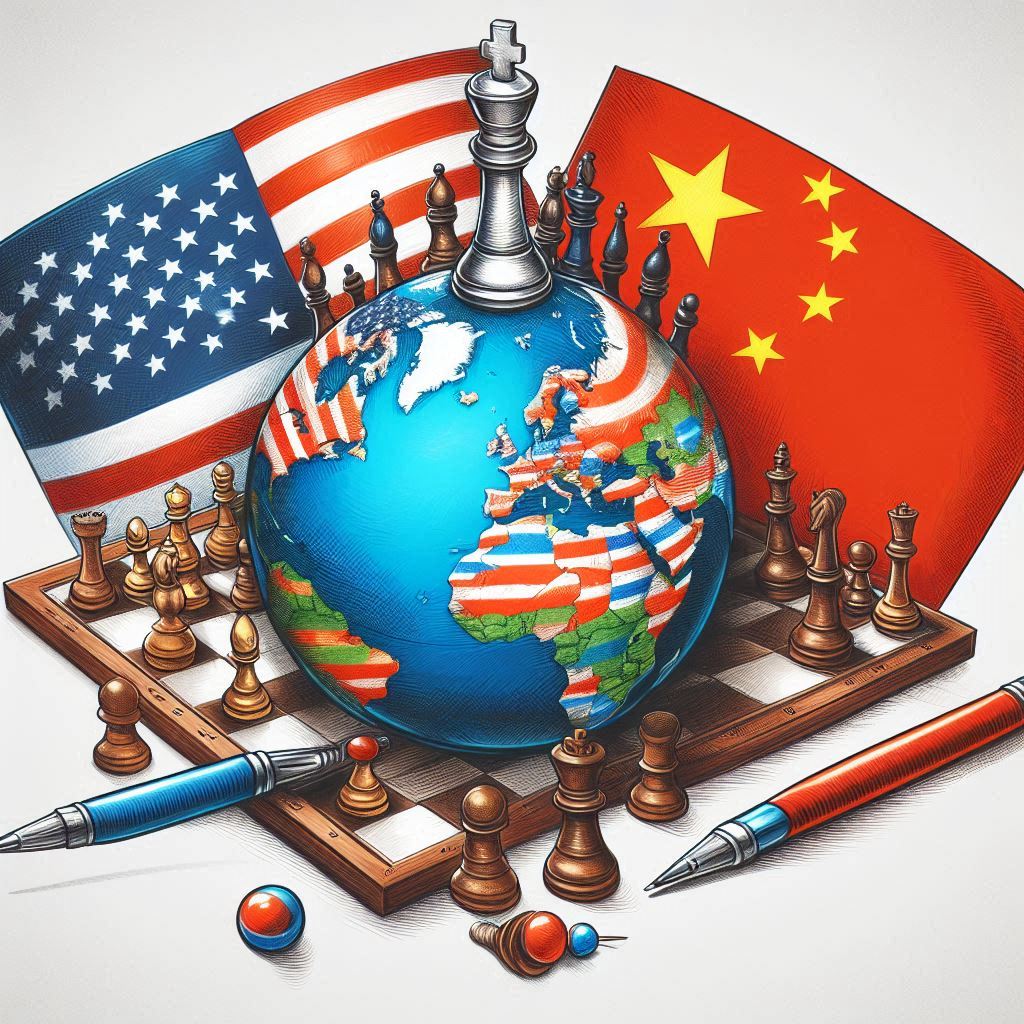
US Defense Secretary visits Cambodia amid concern about China
U.S. Secretary of Defense Lloyd Austin arrived in Phnom Penh on Tuesday for a brief visit, days after Cambodia and China wrapped up their biggest ever military exercise. During his one-day visit, Austin will meet top Cambodian officials “to discuss defense issues with the new Cambodian leadership,” the U.S. Embassy in Phnom Penh said in a statement. “This is the first bilateral visit by a U.S. Secretary of Defense, and it is the second for Secretary Austin following his attendance at the ASEAN Defense Ministers Meeting-Plus in November 2022,” it said. Austin arrived in Cambodia from Singapore where he attended the annual Shangri-La Dialogue security forum. During the conference, the secretary sought to reassure U.S. allies of Washington’s “iron-clad” commitment in the region in the face of growing rivalry with China. China and Cambodia have just held a 15-day military exercise, both on land and at sea, with the participation of three Chinese warships, two of which have been in Cambodia for six months at the Ream naval base. The two corvettes were still seen docked at the base in Sihanoukville on Monday. The U.S government has said it has “serious concerns” about China’s plans for exclusive control over portions of the Ream Naval Base. Cambodia has repeatedly denied handing the base over to China. U.S.-Cambodian relations have become strained during the past decade partly over U.S. concerns about the suppression of Cambodia’s political opposition. In 2017, the Cambodian government suspended the joint Angkor Sentinel exercises between the two militaries and in 2018, the U.S. government suspended military assistance to Cambodia in response to its suppression of the opposition. Cambodia under veteran leader Hun Sen rejected U.S. criticism of its domestic political conditions and built closer relations with China. Hun Sen stepped down as prime minister last year with his son, Hun Manet, taking over Turning a new page? Soon after arriving in Phnom Penh, Austin paid a courtesy call on Hun Sen, who is now president of the Senate. Hun Sen was accompanied by former defense minister Tea Banh in the meeting. Austin also met Prime Minister Hun Manet, a West Point military academy graduate, and Defense Minister Tea Seiha. Hun Manet and Tea Seiha are Hun Sen’s and Tea Banh’s sons, respectively. Chhengpor Aun, research fellow at The Future Forum, a Cambodian think-tank, said Austin’s visit gave Cambodia’s new leaders the opportunity to highlight more balance in their country’s diplomacy. “Secretary Austin will be much welcomed in Phnom Penh in general because his presence will help back up the Cambodian government’s attempt to prove it is still on the course of its promised neutrality in foreign relations,” said Chhengpor Aun. “The Ream naval base, the ever-growing Sino-Cambodian defense relations, and strained military-to-military ties between Phnom Penh and Washington will highly likely dominate Secretary Austin’s meetings with senior Cambodian officials.” Sailors stand guard near petrol boats at the Cambodian Ream Naval Base in Sihanoukville, Cambodia, July 26, 2019. (Reuters/Samrang Pring) Another analyst – Nguyen Khac Giang, visiting fellow at Singapore’s ISEAS-Yusof Ishak Institute – said that Austin’s decision to visit Cambodia instead of the close ally the Philippines or newly elevated strategic comprehensive partner Vietnam, “reflects the U.S.’s attempt to reconcile deteriorating U.S.-Cambodia relations.” “With Phnom Penh successfully transitioning leadership from Hun Sen to his son Hun Manet, Washington likely views this as a good moment for rapprochement,” Giang told Radio Free Asia, adding that while sensitive topics such as Chinese influence and the Ream naval base are likely be discussed, he thinks both sides “will focus more on potential cooperation and common interests, particularly as Cambodia will serve as the coordinator of the U.S.-ASEAN Dialogue Relations from 2024 to 2027.” The state-aligned Khmer Times newspaper said that with Hun Manet’s “outward-looking policies,” there’s a unique prospect to recalibrate any misunderstanding and to start a new chapter in the two countries’ relationship, provided that both sides “are genuinely sincere with each other.” The article by Pou Sothirak, senior advisor to the Cambodian Center for Regional Studies, and Him Raksmey, executive director of the Cambodian Center for Regional Studies suggested that the first thing for the U.S. to do wais to rethink its policy of targeted sanctions on Cambodian officials and members of the business elite, and restrictions on trade preferences “which are ineffective and counterproductive, compelling Cambodia deeper into economic reliance on China.” The Future Forum’s Chhengpor Aun agreed that the new generation of Cambodian leaders “presents a window of opportunities for improvement of U.S. relations” as Cambodia wants to secure a stable state of relations with the U.S., now its biggest export destination. Cambodia sold US$8.89 billion worth of goods to the U.S. in 2023, about 40% of its total exports, according to the Cambodian General Department of Customs and Excise. However, “if the visit aims to woo Cambodia away from China or to push political reforms in Phnom Penh, Secretary Austin can be disappointed,” said Chhengpor Aun. “Sino-Cambodian ties are important for Phnom Penh political elites – be it the old guards or the new princeling generation – in terms of political and regime security,” he said. Edited by Mike Firn.
South Korea to suspend inter-Korean military pact over trash balloons
South Korea decided on Monday to suspend a 2018 inter-Korean tension reduction pact until “mutual trust is restored” in a response to North Korea’s sending of nearly 1,000 trash-filled balloons to the South. The 9/19 Comprehensive Military Agreement, signed on Sept. 19, 2018, aimed at defusing tension and avoiding war, was implemented after a meeting between South Korea’s then-president Moon Jae-in and North Korean leader Kim Jong Un. The presidential National Security Council held a meeting to evaluate North Korea’s recent behavior and agreed to propose a motion suspending the agreement at a Cabinet meeting on Tuesday. “The attendees decided to submit a proposal to suspend the entire effectiveness of the September 19 Military Agreement until mutual trust between the two Koreas is restored,” the presidential office said in a release. North Korea has sent waves of trash-filled balloons into the South since Thursday in what it said was a tit-for-tat campaign against South Korean activists sending balloons carrying propaganda material denouncing the North’s regime. South Korea’s National Security Adviser Chang Ho-jin said on Sunday the government would take “unbearable” measures against the North in response to its balloons and its jamming of GPS signals last week. The anger over the balloons has raised speculation that South Korea might resume propaganda campaigns via loudspeakers along the border. The loudspeakers used to air criticism of the Kim Jong Un regime’s human rights abuses, as well as news and K-pop songs, to the fury of the North. To resume the front-line broadcasts, it would be necessary to nullify the 2018 inter-Korean military agreement. Hours after South Korea’s warning, North Korea said it would suspend its cross-border balloon campaign, though it also threatened to resume it if anti-Pyongyang leaflets were sent from South Korea. The North said its balloon campaign was launched purely in response to leaflets sent by South Korean activists. Fighters for a Free North Korea, a Seoul-based organization that floated anti-Pyongyang balloons over the North last month, said on Monday that it would consider stopping sending leaflets only if the North apologized for sending its trash-bearing balloons to the South. “We send facts, loves, medications, one-dollar bills, dramas and trot music to the North, but how come they send us waste and trash?” the organization said in a statement, referring to a type of Korean music. “North Korea leader Kim Jong Un should immediately apologize.” Edited by Mike Firn.
Tiananmen – 35 years later
Download the poster here June 4 marks the 35th anniversary of the Tiananmen massacre, in which the People’s Liberation Army killed hundreds, possibly thousands of civilians, stamping out weeks of protests in the heart of China’s capital. The government still suppresses mention and memorializing of the 1989 killings in Beijing.
Chinese defense minister denounces ‘outside forces’ at security forum
Chinese Minister of National Defense Dong Jun launched an acerbic attack on what he called the “hegemonic powers” behind tension in the Asia-Pacific, a clear swipe at the United States and its allies. In an address to the annual Shangri-La Dialogue security forum in Singapore, Adm. Dong said that people in the Asia-Pacific are “independent and self-reliant,” and were “against any attempt to turn our countries into vassal states or draw us into bloc confrontations.” “Our people have firmly rejected infiltration, sabotage and coercion by outside forces,” the minister said, adding that regional countries “despise those who attempt to bolster themselves by taking orders from hegemonic powers.” Dong also said China had exercised great restraint in the face of what he called “infringements and provocations” but warned “there is a limit to our restraint.” Beijing has repeatedly accused Washington of assisting Taipei and Manila to stand up to its assertive actions in the Taiwan Strait and the South China Sea. The Pentagon last month deployed an intermediate range missile system in the Philippines during the annual Balikatan military drills, which Beijing condemned as bringing “huge risks of war into the region.” The U.S. House of Representatives has recently passed an $8-billion package to help Taiwan boost its defense capabilities against China. Dong said that “some external interfering forces keep hollowing out the One China principle with the salami slicing strategy.” “They have cooked up Taiwan-related legislations and continued to sell arms to Taiwan and have illegal official contacts with it.” The minister, who took office five months ago after his predecessor was removed over suspected corruption, went on a lengthy tirade against Taiwanese leaders who he called “Taiwan independence separatists.” China considers the democratic island one of its provinces and Dong said that China “will take resolute actions to curb Taiwan independence and make sure such a plot never succeeds.” He accused Taiwan’s leaders of “betrayal of the Chinese nation and their ancestors,” and said they would be “nailed to the pillar of shame in history.” “The Taiwan question is at the core of China’s core interests,” the minister said. “Anyone who supports Taiwan independence will only end in self-destruction.” Cadets gather during an open day at the PLA Naval Submarine Academy, in Qingdao, Shandong province, China April 21, 2024. (Reuters/Florence Lo) Defense analyst Malcolm Davis from the Australian Strategic Policy Institute, or ASPI, said that Dong “made clear a willingness for China to use force to prevent independence and respond to any external forces involved in supporting Taiwan.” “It was a fairly predictable speech and very much the ‘party line’ with little in the way of new comments. In effect this was a propaganda speech and not an accurate statement of Chinese policy,” Davis said. ‘Wolf warriors’ But Dong’s tone did seem more combative than that of his predecessor, Li Shangfu, he added. “On the South China Sea, he issued a warning that China won’t rule out the use of force specifically in relation to the Philippines and the support of the United States,” the Canberra-based analyst said, “That suggests to me that China does intend to escalate the crisis, and has singled out the Philippines as their focus with the goal being to coerce Manila to capitulate to Chinese interests.” Unlike Li and his predecessors, Dong is not a member of the Central Military Commission of the Chinese communist party – the highest national defense organization. “That may be the reason behind Dong’s tough statements to show his clout and get a promotion,” said an Asian analyst who didn’t want to be identified because of the sensitivity of the issue. A Chinese academic praised Dong’s speech and said his attendance at the conference helped bring “China’s real voice” to the world. “The Shangri-La Dialogue as a major security forum bears a great relevance to China,” said Gao Zhikai, vice president of the Center for China and Globalization and chair professor at China’s Soochow University. “It is important that China’s voice, which is increasingly in sharp contrast to that of the U.S., be heard.” Several other Chinese delegates also promoted Beijing’s views at the forum, in a forthright manner known as “wolf warrior” diplomacy. The term, adopted from the title of a Chinese movie, describes an assertive, even aggressive, approach to international relations. Chinese delegate, Maj. Gen. Xu Hui, asks a question at the Shangri-La Dialogue, in Singapore, May 31, 2024. (Reuters/Edgar Su) Maj. Gen. Xu Hui, president of the International College of Defense Studies at China’s National Defense University, confronted Philippine President Ferdinand Marcos Jr. after the latter’s keynote speech on Friday, saying that Manila was risking ruining the “long-earned, long-lasting peace” within ASEAN by responding to Chinese vessels’ activities in the disputed South China Sea. On Saturday, another Chinese delegate, Senior Col. Cao Yanzhong, a researcher at China’s Institute of War Studies, questioned U.S. Secretary of Defense Lloyd Austin about the U.S. alliance system in the region which Beijing compares to “an Asian version of NATO.” During a session on ‘Maritime Law Enforcement and Confidence Building’ on Saturday, another Chinese delegate, Senior Col. Ge Hanwen, associate professor at the College of International Studies at China’s National University of Defense Technology, blamed the Philippines for “dramatically” raising tensions in the region and Japan for using water cannons first in a confrontation at sea. Austin and Dong met for about an hour at the conference on Friday for talks aimed at improving their communications, a U.S. official said. New regional order A Western observer at the forum, speaking on the condition of anonymity, told Radio Free Asia that the Chinese delegates are “on a mission to spread Beijing’s messages and their statements are pre-scripted and pre-approved by the [communist] party.” Beijing-based Gao denied that. “It is only normal that people from all walks of life, including military officers, talk about the topics of their interest,” Gao said. “China attends a lot of international forums because we believe in having our voice heard by as many people as possible.” Dong acknowledged…
New school for overseas Tibetan kids aims to preserve language
In a bid to help preserve Tibet’s language and culture, a nonprofit organization in northern India is transforming one of its facilities into a boarding school where children of Tibetans living overseas can go to live and study. The Dharamsala, India-based school being created by the Tibetan Children’s Villages, or TCV, is accepting applications for the academic year starting Aug. 1 for children entering grades four to eight. There are already several Tibetan boarding schools elsewhere in India, but this will be the first time one is being created for the children of overseas Tibetans. The Lower Tibetan Children’s Villages school (TCV) is seen in Dharamsala, India. (TCV) The move comes as China intensifies its policies to suppress — or even eradicate — Tibetan and other ethnic languages and cultures and replace them with Mandarin and Han Chinese customs. Chinese officials in Tibet and in Tibetan-populated areas in China’s western provinces are using government-run boarding schools to assimilate Tibetan children culturally, religiously and linguistically, rights groups say. Schools become ‘battleground’ Tibetan students are being forcibly removed from their homes and immersed in a Mandarin-language curriculum without an opportunity to learn the Tibetan language or culture. “Tibetan schools are the battleground for CCP ideology,” said Kai Mueller, the Berlin-based executive director and head of U.N. advocacy at the International Campaign for Tibet, referring to the Chinese Communist Party. “We have noted so many forms of indoctrination towards Tibetan children in school that it is quite astounding,” he said. The Lower TCV school in Dharamsala, India, is being renovated as a new boarding school for Tibetan children from abroad. (TCV) The types of indoctrination include poetry competitions on Chinese President Xi Jingping Thought on socialism with Chinese characteristics, field trips to Communist Party museums, and school visits by Chinese officials and members of the Chinese military who teach children about national unity, Mueller said. “The Chinese rulers are using ever new methods to try to transform young Tibetans into loyal Chinese,” he said. “Their main starting point is language,” he said. In a two-pronged approach, Chinese officials work to dissuade children from learning their mother tongue by sending them to compulsory boarding schools and make Mandarin attractive to young Tibetans, Mueller said. “In this way, the Chinese leadership wants to destroy the youth’s connection to traditional Tibetan culture and language,” he said. Students learn about tuberculosis at the Tibetan Children’s Villages lower school in Dharamsala, India, in this undated photo. (TCV) Grassroots idea For this reason, many Tibetans both inside and outside Tibet urged Tibetan Children’s Villages to set up a boarding school for children from overseas, TCV Director Sonam Sichoe told Radio Free Asia. The proposal was then approved by the network’s board. The school’s main priority will be to teach Tibetan language skills and cultural traditions, while simultaneously receiving a modern education that is on par with the West, Sichoe said. So far, about 15 students from the United States, Canada, Australia, Denmark and Germany have enrolled. Regardless of the numbers, the school will proceed as planned, he said. In the dormitories, the children from overseas will be mixed with students from India so that they don’t end up speaking only English, he added. The Lower TCV school in Dharamsala, India, is being renovated as a new boarding school for Tibetan children from abroad. (TCV) Tuition, room and board cost US$350 per child per month, Sichoe said. Because the children are expected to come from different countries, the main medium of teaching academic subjects will be in English to ensure ease of understanding and communication, he said. Studio Nyandak Dharamsala, a design company whose local employees are all TCV alumni, is working with school administrators to renovate the campus. Changes include the installation of Western toilets, single beds instead of bunk beds, water heating facilities and solar panels. Expanded network Set up in 1960 as a nursery for Tibetan children, TCV was established after the Dalai Lama proposed a center to care for kids who had been orphaned or separated from their families while fleeing after China’s annexation of Tibet in 1959. Since then, the organization expanded its footprint across India to become a network of boarding schools caring for over 15,000 children. The Dharamsala-based Lower TCV campus — now being renovated into a residential school for overseas children — came about in the 1980s after the main TCV school was inundated with children who had been smuggled out of Tibet by Tibetan parents during China’s liberalization program of that period. Earlier this year, Jetsun Pema, the younger sister of the Dalai Lama who led the school for many years, received the Pearl S. Buck award from Randolph College in Lynchburg, Virginia, in recognition of her service. Students of the Tibetan Children’s Villages lower school perform a drum line in Dharamsala, India, in this undated photo. (TCV) Parents’ reactions Migmar Bhuti, a Tibetan in New York, welcomed the new boarding school, saying it would enable Tibetan children to more effectively learn and preserve the Tibetan language and culture at an early age. But she also expressed concern over whether math, English, science and the social sciences would be adequately taught. “Since the Lower TCV School is planning to only take in students from the fourth to eighth grades, I wonder if that will allow the children to catch up in their classes when they move back here from the ninth grade, or whether they will need to drop a grade,” she told RFA Tibetan. Given that academic and vacation schedules in the West differ from those in India, school officials are in discussions with parents about these concerns, said Choeying Dhondup, TCV’s general-secretary. The Lower TCV school in Dharamsala, India, is being renovated as a new residential school for Tibetan children from abroad. (TCV) Kalsang Dorji, a father of two children and principal of a Sunday school for Tibetan children in Berkeley, California, said Tibetans there have wanted a dedicated residential school to teach their language and culture to…
US defense chief seeks to reassure Asia-Pacific partners
U.S. Secretary of Defense Lloyd Austin has reconfirmed Washington’s strong commitment to the Indo-Pacific, as well as to working with allies and partners in the face of growing rivalry with China. Austin spoke at the Shangri-La Dialogue annual security forum on Saturday, just a day after meeting with his Chinese counterpart to open lines of communication between the two world powers. This was the secretary’s third time to speak at the forum and likely his last as a U.S. presidential election in November may bring changes in defense diplomacy. The Indo-Pacific “has remained our priority theater of operations,” Austin said, seeking to brush off concerns that other security challenges in Ukraine and Gaza may have shifted U.S. attention. He stressed that Washington is “deeply committed” to the region, adding “We are all in. And we’re not going anywhere.” He went on to list a number of cooperation projects between the U.S and countries including Australia, Japan, India and the Philippines. Austin said that the U.S. “can be secure only if Asia is secure.” “The defense secretary’s speech shows that the dynamics of U.S. strategic partnerships may have changed because Washington has to balance different world regions, but not so much,” said Alexander Vuving, professor at the Daniel K. Inouye Asia-Pacific Center for Security Studies in Hawaii. Other factors that may have contributed to the slight shift, in Vuving’s opinion, are U.S. domestic politics and the “responses of regional states and non-state actors to the weakening of the current international order.” The Pentagon chief, meanwhile, emphasized what he called the “power of partnerships” amid a “new convergence” in the region. “This new convergence is about coming together, not splitting apart. It isn’t about imposing one country’s will,” Austin said in an apparent dig at China, “It isn’t about bullying or coercion. It’s about the free choices of sovereign states.” Beijing has been accused by some of its neighbors of acting aggressively in the South China Sea and the Taiwan Strait. In his keynote speech on Friday, Philippine President Ferdinand Marcos Jr. condemned “assertive actions that aim to propagate excessive, baseless claims through force, intimidation and deception,” believed to be committed by Beijing. The Philippines has accused Chinese coast guard vessels of harassing and preventing Filipino fishermen and law enforcement agencies from operating in the disputed waters of the South China Sea. While not mentioning China, Austin said that “the harassment that the Philippines has faced is dangerous” and the peaceful resolution of disputes should be achieved through dialogue and not coercion or conflict. “And certainly not through so-called punishment.” Just 10 days ago, the Chinese military held large-scale “punishment” drills around Taiwan after Lai Ching-te was sworn in as the new president of the democratic island. Strengthening partnerships The U.S. House of Representatives last month passed a $8-billion defense package to help Taipei counter Beijing, which considers Taiwan a Chinese province that should be reunited with the mainland, by force if necessary. China reacted angrily, saying this sends the wrong signal to “Taiwan independence separatist forces” and the “military collusion” between the U.S. and Taiwan would only push up tensions and the risk of conflict and confrontation in the Taiwan Strait. China has long said Washington is trying to build a NATO-like alliance in the Asia-Pacific, an accusation that was brought up and denied on Saturday by the U.S. defense secretary. Replying to a question by Chinese Senior Col. Yanzhong Cao about the U.S.’ “alliance system” in the region, Austin said that “like-minded countries with similar values and a common vision of a free and open Indo-Pacific are working together to achieve that vision.” “And we will continue to do those kinds of things going forward,” he said. The defense secretary, however, called for better communication with China, saying that “dialogue is not a reward, it is a necessity,” and that “there’s no substitute for open lines of communication to avoid misunderstanding and miscalculations.” U.S. Secretary of Defense Lloyd Austin meets with Chinese Minister of Defense Adm. Dong Jun in Singapore, May 31, 2024. (U.S. Department of Defense) Austin and the Chinese minister of national defense, Adm. Dong Jun, held a one-hour meeting on Friday to discuss U.S.-China defense relations and other security issues. It was the first in-person meeting between the twos, marking a resumption of communication after then-defense minister Li Shangfu declined a meeting with Austin last year Chinese Defense Ministry spokesperson Wu Qian told reporters afterwards that it showed the bilateral military relations were stabilizing. “The resumption of exchanges does not mean that differences and conflicts between the two countries have been resolved,” warned a Taiwanese analyst. “China is still conducting military exercises around Taiwan and the U.S. continues joint exercises with the Philippines and other allies,” said Shen Ming-Shih from the Institute for National Defense and Security Research in Taipei. He added that while both sides keep pursuing their own objectives, the best they can do is to “have more dialogue and exercise restraint.” Edited by Mike Firn.
‘We’ll never forget,’ Tiananmen massacre families write to Xi Jinping
The relatives of civilians killed by Chinese troops who crushed pro-democracy protests in Beijing’s Tiananmen Square with machine guns and tanks on the night of June 3-4, 1989, have written to President Xi Jinping calling for an official reckoning with the bloodshed on the 35th anniversary of the crackdown. “We will never forget the lives that were lost to those brutal bullets or crushed by tanks on June 4 35 years ago,” the letter said. “Those who disappeared, whose relatives couldn’t even find their bodies to wipe away the blood and bid them a final farewell,” the letter said. “It is too cruel that this happened along a 10-kilometer stretch of Chang’an Boulevard in Beijing in peacetime.” Public mourning for victims or discussion of the events of spring and summer 1989 are banned in China, and references to June 4, 1989, are blocked, filtered or deleted by the Great Firewall of government internet censorship. Hundreds, perhaps thousands, died when late supreme leader Deng Xiaoping ordered troops into the Chinese capital to clear protesters and hunger-striking students from Tiananmen Square. While any account of the events of that summer have been scrubbed from the public record, younger people have been able to find out about it by visiting overseas websites, and have started taking part in annual commemorative activities around the world alongside exiled Hong Kongers. Campaigning for accountability The letter is the latest to be addressed to China’s highest-ranking leader in what has become an annual ritual for the Tiananmen Mothers, a group of bereaved relatives that campaigns for official accountability, transparency about the death toll and compensation for victims’ families. It said official rhetoric on the crackdown was “intolerable” to the families of victims because it “reverses right and wrong, and ignores the facts.” The letters have never gotten a reply, and bereaved relatives are typically asked to keep a low profile when the sensitive anniversary of the bloodshed rolls around. Calls to group spokesperson You Weijie and member Zhang Xianling rang unanswered on Friday after the letter was published. Former 1989 student protester Zheng Xuguang, who now lives in the United States, said he isn’t surprised by the deafening silence from Beijing, which has described the weeks-long student-led pro-democracy movement on Tiananmen Square as “counterrevolutionary rebellion,” or “political turmoil.” A military helicopter drops leaflets above Tiananmen Square, Beijing, on May 22, 1989, which state that the student protesters should leave the square as soon as possible on Monday morning. (Shunsuke Akatsuka/Reuters) “How can they admit that they were wrong to kill people?” Zheng said. “Xi Jinping and the Communist Party are co-dependent; if Xi were to reappraise the official verdict of June 4 … the Communist Party would fall from power.” “I don’t think he’s going to do that, because there’s no room in his ideology for these ideas.” Tseng Chien-yuen, an associate professor at Taiwan’s Central University, said today’s China is in sore need of some reflection on the massacre, however. “They need to look at it again and reappraise it, apologize and compensate the innocent students and others who were shot and killed back then, and think about whether to hold those responsible accountable,” Tseng said. “I don’t think Xi Jinping would need to bear the historical responsibility for the legacy of [late supreme leader] Deng Xiaoping,” he said. Poll: What would you do? RFA’s Mandarin Service asked its followers and listeners in a poll on X whether they would join the 1989 student movement today, if they could travel back in time to 1989. Many listeners responded outright that they would, while others said their view of the tragedy was colored by the official view, and didn’t change until they left China. Others said they have become more radical than the 1989 protesters. “We were very naive back then, because we didn’t want to overthrow the Communist Party, but to reform it,” a person who gave only the nickname Matt responded. “Unfortunately, the Communist Party didn’t even give people the chance to do that.” “For our generation, June 4 is an unfamiliar expression,” wrote a high schooler from the northeastern city of Qingdao. “Growing up under the red flag of this fake party, we have been indoctrinated with the idea that loving the party and loving the country are the same thing.” Another responded by email that they hadn’t believed overseas media reports about the massacre at first, despite finding them on overseas websites. “Mainland Chinese were either misled by their pro-party stance, or they knew a little more than that, but still thought that the protests had to be brought to an end somehow,” they said. A respondent who gave the nickname Key said he had learned about the massacre and the student movement from older people in his family, and said he admired the 1989 protesters, but added: “Times have changed, and the younger generation needs to fight for their rights in a peaceful and rational way.” User “wophb” wrote: “35 years on, the June 4 incident still has a profound impact on us and is worth reflecting on. Each generation has a unique mission.” Drawing a parallel with the “white paper” protests across China in 2022, the user said they would consider taking part in the 1989 movement if they could go back in time. Successful brainwashing Wu Heming, a Chinese student currently in California, said he is still noticing the after-effects of his education at the hands of the Chinese Communist Party two years after arriving on American soil. “This is mainly because the Chinese Communist Party’s brainwashing in education is very, very successful,” Wu said. “From childhood onwards, people have no other channels through which to access any other information, so all of your thought patterns get solidified by that rhetoric.” Another student and former “white paper” protester Zhang Jinrui said the two movements had a lot in common. “ “If you compare those who participated in the June 4 incident and those who participated in the white paper…
China cracks down on Tibetans during holy month
Chinese authorities have instructed Tibetan students, government workers and retirees to refrain from engaging in religious activities in Tibet’s capital Lhasa during the Buddhist holy month of Saga Dawa, four sources said. The Saga Dawa festival occurs during the fourth month of the Tibetan lunar calendar and runs from May 9 to June 6 this year. For Tibetan Buddhists, it marks the period of Buddha’s birth, enlightenment and parinirvana — the state entered after death by someone who has attained nirvana during their lifetime. During the holy month, thousands of religious pilgrims visit temples and walk sacred kora routes around Lingkhor and Barkhor streets in Lhasa, encircling the revered Jokhang Temple. The ritual kora — making a circumambulation around sacred sites or objects as part of a pilgrimage — holds immense significance for Tibetan Buddhists who believe that virtuous deeds performed during Saga Dawa are magnified based on their location. A video obtained by Radio Free Asia showed heavy police presence surrounding the Barkhor area — the heart of the capital with its famed pilgrimage circuit — on May 22, the eve of the 15th day of the fourth month of the Tibetan Lunar calendar, considered one of the holiest days during Saga Dawa. Since the start of Saga Dawa, Chinese police have tightened security around key religious sites, including Potala Palace, Jokhang Temple, and the Barkhor area, the sources told RFA. The measures illustrate the deterioration of religious freedom in Tibet under the Chinese government’s suppression and Sinicization of Tibetan Buddhism — a policy that seeks to bring the religion under the control of the Chinese Communist Party. Police everywhere While devotees were seen on pilgrimage on the other days of Saga Dawa, the 15th day on May 23 saw heightened restrictions, with police stationed along the pathways leading to the Sera, Gandhen and Drepung monasteries, said the sources who declined to be named out of fear of retribution by authorities. “There isn’t any place where you don’t see police and interrogation stations,” one of the sources told RFA. Tibetans line up to offer prayers as they mark the day of Buddha’s birth, death and enlightenment at the Tsuklakhang temple complex in Dharamshala, India, May 23, 2024. (Ashwini Bhatia/AP) The Chinese government has increased the number of police checkpoints in and around Lhasa, and authorities have been interrogating Tibetans spontaneously, the person said. Individuals who do not have a shenfenzhang, or Chinese resident identity card, are prohibited from visiting temples, leading to the heightened restrictions now in effect, said a second source. “During our visits to circumambulate the holy sites, Chinese police regularly inspect everyone’s identity cards and engage in arguments,” said a third source. “Having to engage in disputes with the Chinese police takes an emotional toll on us, and this is one of the reasons why many are afraid of engaging in religious activities as often as they’d like,” he said. A Nepalese monk lights a butter lamp during Saga Dawa at Swayambhunath, one of the holiest Buddhist stupas in Nepal, in Kathmandu, May 24, 2013. (Prakash Mathema/AFP) Facial recognition technology is pervasive at key pilgrimage sites and authorities regularly frisk Tibetans making pilgrimages, said a fourth source. Flag-raising festival Additionally, during the Ngari Flag Raising Festival in Purang county, called Pulan in Chinese, of Ngari Prefecture in the Tibetan Autonomous Region, Chinese authorities increased security as people gathered on May 23 for the annual ceremony, and banned the use of drones during the event, according to the sources. The annual tradition of hoisting a large central prayer flag pole in front of Mount Kailash in Tibet began in 1681 during the time of the 5th Dalai Lama. Buddhist monks and Hindu holy men sit by a roadside expecting alms as Tibetans mark the day of Buddha’s birth, death and enlightenment in Dharamsala, India, May 23, 2024. (Ashwini Bhatia/AP) In a government notice dated May 16, the Pulan County Public Security Bureau in Talqin said the use of drones and other aircraft during the Saga Dawa flag raising festival was prohibited and that violators would be punished. Tibetans who attended the event were subjected to extensive questioning and coerced into agreeing to uphold social order and refraining from causing discord, said one of the sources. Police instructed people not to share photos or videos of the festival on social media, he said. Translated by Tenzin Dickyi for RFA Tibetan. Edited by Tenzin Pema for RFA Tibetan and by Roseanne Gerin and Malcolm Foster.
Dozens of Taiwanese celebrities endorse Beijing’s claim on island
Dozens of artists and actors from Taiwan have been lining up on social media to endorse Beijing’s territorial claim on the island by retweeting a Chinese state media post in support of eventual “unification.” More than 70 artists and celebrities including journalist Patty Hou, singer and actress Nana Ouyang and TV host and actress Dee Hsu reposted a statement from Chinese state broadcaster CCTV on the Weibo social media platform which said that independence for Taiwan, which has never been ruled by Beijing, was “a dead end.” “The unification of Taiwan with China cannot be stopped,” said the May 22 statement, local media reported, citing a social media spreadsheet. CCTV’s post was in response to the inauguration speech of Taiwan’s elected President Lai Ching-te, who called on Beijing to stop threatening his country, and respect the will of its 23 million people, the majority of whom have no wish to be ruled by the Chinese Communist Party. “Taiwan has never been a country and will never become one,” the post said, adding “Taiwanese independence is a dead end. Unification with the motherland is unstoppable! China will eventually achieve complete unification.” Other artists appeared to be offering their support less directly, by claiming a “Chinese” identity, a view that isn’t shared by most of their compatriots. Lead singer Ashin of the Taiwanese band Mayday told fans at a concert at Beijing’s Bird’s Nest stadium on Saturday that “We Chinese, when we come to Beijing, must eat roast duck! What else should we eat?” in a statement similar to the saying, “When in Rome.” And singer Jolin Tsai, who has had an LGBTQ+-themed song deleted from her concerts by Chinese censors, told concert-goers that residents of “our Chinese city of Nanchang” were the most passionate fans. Ashin of Taiwanese band Mayday performs in Kuala Lumpur in 2013. (Lai Seng Sin/AP) One fan commented on Nana Ouyang’s re-post that they were unhappy about her support for Beijing. “I’ve been your fan for a long time, but I love Taiwan more,” the fan wrote in comments reported by the Taiwan News. Another told Ouyang to go live in China: “Don’t come back to Taiwan.” Some Hong Kong artists also followed suit, including martial arts star Donnie Yen, who sparked controversy when he was a presenter at last year’s Oscars despite protests over his pro-Beijing stance on the Hong Kong protests of 2019. Resisting pressure Not everyone piled onto the bandwagon, however. Taiwanese actor Yang Hsiu-hui told reporters on Sunday that she identifies as Taiwanese, and doesn’t want to make money from China. “Some people told me I would lose access to the market in mainland China,” Yang said, adding that she had turned down jobs in China for political reasons. “I gave up on that market a long time ago,” she said. Taiwanese singer Jolin Tsai is pictured in Milan in 2017. (Marco Bertolrello/AFP) President Lai expressed empathy for the artists in a statement on Sunday, saying he could understand how much pressure they were under “in another person’s house,” and that they may privately feel very differently. Ruling Democratic Progressive Party Mayor of Kaohsiung Chen Chi-mai said China should honor freedom of speech rather than coercing Taiwanese entertainers into taking a political stance, while the Kuomintang, the largest party in Taiwan’s parliament, said putting pressure on Taiwan’s artist doesn’t “build goodwill across the Taiwan Strait,” local media reported. The island’s Ministry of Culture said the artists were forced into taking a position by “unavoidable circumstances,” and that such coercion would never happen in democratic Taiwan. Taiwan President Lai Ching-te wears a hat given to him by Rep. Michael McCaul, a Texas Republican, in Taipei on May 27, 2024. (Taiwan Presidential Office via AP) “To the artists taking a public stance under unavoidable circumstances, we extend our understanding,” the ministry said in a statement on Sunday. “Taiwan … will never ask anyone to take a public stance, nor will anyone be punished for taking, or not taking, such a stance.” “The lack of political coercion is the most valuable thing about a free Taiwan,” the ministry said. ‘Divide and conquer’ Chinese dissident Gong Yujian, who now lives permanently in Taiwan, told RFA Mandarin that the artists’ statements are part of a campaign to wage “cognitive warfare” on Taiwan. “I am certain, and can say without hesitation, that this is a case of the Chinese Communist Party’s divide-and-rule tactics and cognitive warfare being waged against Taiwan,” Gong said. “The aim is to split supporters of independence, with the ultimate aim of benefiting the Chinese Communist Party and its ‘fifth column’ in Taiwan,” he said. Kang Kai, chairman of the Taiwan Performing Arts Union, told RFA that he had no problem with President Lai’s approach. “Everyone has their own opinion,” Kang said. “The most important thing is that they work hard to support their families and do a good job.” “I don’t like to see artists getting involved in politics. Neither side wants a war,” he said. Chinese dissident Gong Yujian poses for a photo in New Taipei City in 2015. (Pichi Chuang/Reuters) A spokesperson for a foundation run by former Kuomintang President Ma Ying-jeou, who recently met with Chinese President Xi Jinping on a trip to Beijing, told RFA Mandarin that “bullying” can work both ways. “It seems that you are expected to say you’re Taiwanese and not Chinese, if you want to be respected … in Taiwan,” Ma Ying-jeou Foundation CEO Hsiao Hsu-tsen said. “That’s just another form of suppression and coercion.” But Taipei Mayor Chiang Wanan said there would be no repercussions for the Taiwanese artists who supported Beijing’s claim on the island. “We are a free and democratic country, and Taipei is a diverse and open city, so how can we stop them from performing?” Chiang said. Translated by Luisetta Mudie. Edited by Malcolm Foster.
China ‘can claim the South China Sea’: former Malaysian PM
Former Malaysian Prime Minister Mahathir Mohamad said that China can claim the South China Sea, but that doesn’t mean that other countries with overlapping claims should accept it, a view that differs from the Malaysian government’s official line. Beijing has drawn a so-called nine-dash line to demarcate its “historic claim” of 90% of the disputed waters. Brunei, Malaysia, the Philippines, Taiwan and Vietnam also hold conflicting claims over smaller parts of the South China Sea. “OK, you can claim,” said Mahathir at the annual Future of Asia conference hosted by Nikkei Inc. in Tokyo at the weekend. “We don’t accept your claim but we don’t have to go to war against you because of your claim.” “Maybe one day you will realize that the claim means nothing,” the 98-year-old former leader said. He did not elaborate. Mahathir’s statement appears to differ from the Malaysian government’s official line. Most recently in 2023, Malaysia, together with the Philippines, Taiwan and Vietnam, rejected China’s map that depicts its sovereignty in the South China Sea. “They claim that the South China Sea’s belonging to them, but they have not stopped ships from passing through,” he said, adding that Kuala Lumpur has been producing oil and gas in the sea but “so far they have not done anything.” “As long as there is no stoppage of the passage of ships through the South China Sea then it’s good enough.” The former leader argued that priorities should be given to maintaining peace and fostering economic development. The 10-member Southeast Asian bloc, ASEAN, has been peaceful “compared to other regional groupings,” he said, “Until now there’s no major wars between ASEAN countries.” ASEAN could serve as “a good model” for the world where there are different ideologies but “we don’t go to war with each other.” Malaysia will hold the grouping’s rotating chair in 2025, taking over from Laos. Not taking sides When asked about China-U.S. rivalry, the veteran leader urged regional countries to stay neutral as “if we take sides, we are going to lose either the American market or the Chinese market.” He noted that China did appear to be aggressive but it was the biggest trading partner for ASEAN countries and “we cannot lose that market.” He also warned against taking sides in the Taiwan issue, saying that there was “no necessity” to see a confrontation between China and Taiwan. Beijing considers democratically governed Taiwan a Chinese province that should be reunited with the mainland, by force if necessary. Last week, China conducted a two-day “punishment” military exercise around Taiwan, believed to be in response to the inauguration of the new Taiwanese president, Lai Ching-te. Mahathir said that China’s leader, Xi Jinping, “seems to be more ambitious and aggressive,” but China’s policies may change in future because of changes at the top. “Leaders don’t live forever so policies may change when leadership changes,” he said. Mahathir Mohamad, who will be 99 in July, served as prime minister from 1981 to 2003 and again from 2018 to 2020. Incumbent Malaysian prime minister Anwar Ibrahim was also present at the Future of Asia 2024 forum and delivered a speech. In an interview with Nikkei Asia on the forum’s sidelines, Anwar said that his focus “will be the economy.” Malaysia’s position remains that disputes should be settled via engagement and the way forward is to seek peaceful resolution through negotiations, according to Anwar. Future of Asia, held by Japan’s Nikkei annually since 1995, is “an international gathering where political, economic, and academic leaders from the Asia-Pacific region offer their opinions frankly and freely on regional issues and the role of Asia in the world,” according to the company. Edited by Taejun Kang and Mike Firn.
