
Category: East Asia
Exiled Tibetan political leader honored with democracy medal
The leader of Tibet’s government-in-exile on Thursday won the Democracy Service Medal from the U.S.-based National Endowment for Democracy, recognizing Sikyong Penpa Tsering’s commitment to advancing democracy and promoting the dignity of the Tibetan people. In his acceptance speech, Tsering dedicated the award to Tibetans inside Tibet and in exile, and to the Dalai Lama, acknowledging the Tibetan Buddhist spiritual leader’s role in defending democracy and human rights for all Tibetans. “I am an ordinary person, but His Holiness the 14th Dalai Lama is the architect and spirit behind everything that we are now or what we have today,” he said. during the award ceremony at the U.S. Chamber of Commerce in Washington. “This award is for the people I serve,” said Tsering, who is head of the Central Tibetan Administration. The award, which honors people defending democracy worldwide, was also given to former U.S. House Speaker Nancy Pelosi, Senate Republican leader Mitch McConnell, Russian opposition leader Vladimir Kara-Murza and Free Belarus leader Sviatlana Tsikhanouskaya. The Dalai Lama reacts after receiving the National Endowment for Democracy’s Democracy Service Medal during a ceremony at the Library of Congress in Washington, Feb. 19, 2010. (Jason Reed/Reuters) Since taking office after winning the 2021 democratic elections which saw a 77% voter turnout, Sikyong Penpa Tsering has worked to counter Chinese influence and mobilised Tibet’s allies to speak up against the suppression of cultural identity within Tibet, said Castro. “In recognition of those efforts, it’s my honour to present the 2024 democracy service medal to Sikyong Penpa Tsering on behalf of the National Endowment for Democracy. Also on Thursday, the Tibet Action Institute received the endowment’s Democracy Award for its work in documenting the Chinese Communist Party’s efforts to erase Tibetan children’s identity by forcibly enrolling them in state-run boarding schools in Tibet. The Regional Center for Human Rights and the Waey Organisation also received the Democracy Award. The National Endowment for Democracy, founded in 1983, promotes democracy worldwide through grants funded primarily by the U.S. Congress. Resolve Tibet Act The ceremony came a day after the U.S. Congress passed the Resolve Tibet Act, urging China to resolve the Tibet-China dispute through dialogue. It now awaits President Joe Biden’s signature to become law. It calls on Beijing to resume dialogue with the Dalai Lama, who is the spiritual leader of Tibet, and other Tibetan leaders about how Tibet is governed. No formal talks have taken place since 2010. The National Endowment for Democracy’s Democracy Service Medal is pictured before being presented to the Dalai Lama at the Library of Congress in Washington, Feb. 19, 2010. (Jason Reed/Reuters) Tsering welcomed the passage of the bill and expressed hope that Biden would sign it into law soon. He also confirmed that a congressional bipartisan delegation led by Rep. Michael McCaul and which includes Pelosi, is set to meet with the Dalai Lama and Central Tibetan Administration leaders in India on June 19. Tsering also presented Pelosi — a long-time Tibet supporter and strong China critic — with her award, while lauding her unwavering fight for democracy, and against authoritarianism, everywhere. Pelosi commended the endowment for its efforts to highlight global injustices. “One of the cruelest tactics used by oppressors is to imprison people and make them disappear, hoping they will be forgotten.” she said. “But we do not forget them,” she said. “Our members of Congress, in a bipartisan manner, consistently raise their names—whether on the House floor, in meetings with heads of state, or during visits to other countries.” Additional reporting by Yeshi Tashi and Tenzin Pema. Edited by Eugene Whong and Malcolm Foster.
China gives 6 patrol boats to Myanmar’s military junta
China has delivered six patrol boats to Myanmar’s military junta, fulfilling a promise made in 2020 to the country’s previous democratically elected civilian government, the Chinese Embassy said in a statement on Wednesday. The patrol boats that were handed over in Yangon on Tuesday will be used in law enforcement efforts to control gambling and drug trafficking and in rescue and water resources protection activities, the embassy said. But a former army officer, who wished not to be named for security reasons, told RFA that the vessels could also be useful for naval military operations in Rakhine state, which has several well-traveled rivers and an Indian Ocean coastline. Rakhine state has seen intense fighting between military junta troops and the ethnic minority insurgent Arakan Army since last November. “If these boats are modified a little bit, weapons could be installed,” the former army officer said. A navy patrol boat donated by China is docked at Lanmataw jetty in Yangon, Myanmar, June 12, 2024. (RFA) Four of the patrol boats are 48 meters long (157 feet), and the other two are 28 meters long (91 feet), the embassy said. The civilian government under the National League for Democracy first requested the vessels in 2018. China’s projects in Rakhine An agreement was made in 2020 during Chinese President Xi Jinping’s two-day visit to Myanmar, in which several deals were signed to implement multibillion dollar infrastructure projects under the Belt and Road Initiative. The projects include a US$1.3 billion deep-sea port in Rakhine state’s Kyaukphyu, as well as the China-Myanmar Economic Corridor, a 620 km (1,000 mile) high-speed railway and road network that will run from China’s Kunming city through Myanmar’s major economic hubs and on to the port. The corridor will ultimately give China crucial access to the Indian Ocean at Kyaukphyu. The military junta removed the civilian government and seized power in February 2021. A resident of Kyaukphyu township who closely monitors the Chinese projects told RFA that the Chinese ambassador visited Kyaukphyu on Monday. Human Rights Watch found in 2022 that the Myanmar junta had used Japan-funded passenger ships during military operations in Rakhine state. “The Myanmar junta’s misuse of Japanese development aid for military purposes effectively makes Japan a backer of the junta’s military operations,” Asia program officer Teppei Kasai said at the time. When asked via email on Wednesday if the patrol boats could be used for military purposes, the Chinese Embassy in Myanmar directed RFA to a statement posted on its Facebook page. RFA’s attempts to contact junta spokesman Major Gen. Zaw Min Tun to ask about the patrol boats were unsuccessful on Wednesday. Translated by Aung Naing. Edited by Matt Reed and Malcolm Foster.
South Korea fires warning shots as North Korean soldiers cross border
South Korean soldiers fired warning shots after a dozen soldiers from North Korea crossed one of the world’s most fortified borders earlier this week, the South’s military said Tuesday. The incident occurred at 12:30 p.m. on Sunday, as the soldiers crossed the military demarcation line, or MDL, that bisects the demilitarized zone, or DMZ, dividing the two Koreas, the South Korean Joint Chiefs of Staff said, adding that it was likely a mistake. “The area near the DMZ is heavily wooded, and the MDL signs are not clearly visible,” Lee Sung Joon, a spokesperson for the joint chiefs, told reporters at a news briefing. “Therefore, (they) were moving through the bush in a situation where there were no clear paths, and the South Korean military had been observing them even before they got close to the MDL.” After the warning shots were fired, the North Korean soldiers promptly crossed back over into North Korean territory, which Lee said resulted in the joint chiefs’ assessment that there was no intent to cross the MDL. North Korean escapees prepare to release balloons carrying leaflets and a banner denouncing North Korean leader Kim Jong Un for North Korea’s latest nuclear test, in Paju, near the border with North Korea, South Korea, on Sept. 15, 2016. (Ahn Young-joon/AP) A joint chiefs of staff official told RFA Korean that the North Korean soldiers were a mere 50 meters inside South Korean territory and were there for only a short time. He said they were working with tools like pickaxes and it is assumed that they lost their way when they crossed. ‘Primary enemy’ The incident comes at a time when tensions are high on the Korean peninsula, with the North having this year defined the South as a primary enemy, and no longer referring to North and South Koreans as being “one race” – an ethno-nationalist, pro-unification phrase that has been used in both Koreas over the years. Since then, the North has tested missiles several times, and recently floated trash-filled balloons over the border, a nod to South Korea-based civil groups’ decades-old practice of launching their own balloons filled with anti-regime leaflets. South Korean soldiers examine various objects including what appeared to be trash from a balloon believed to have been sent by North Korea, in Incheon, South Korea, June 2, 2024. (Yonhap via Reuters) The incident occurred on the same day that the South Korean military made loudspeaker broadcasts audible in North Korea in response to the trash balloons. The joint chiefs said they would continue to monitor North Korean military movements and take “necessary measures in accordance with operational procedures.” Common occurrence Experts told RFA that border incursions like Sunday’s happen quite frequently and the South’s assessment of the situation was proper and justified. “Incidents like this have been pretty common along the militarized zone for the entirety of the armistice,” said Sydney Seiler, the former national intelligence officer for North Korea at the National Intelligence Council, an U.S. government organization that bridges policymakers with the intelligence community. “It would be unnatural or it would be strange to think of this as anything more complex than what’s been described.” A balloon believed to have been sent by North Korea, carrying various objects including what appeared to be trash and excrement, is seen over a rice field at Cheorwon, South Korea, May 29, 2024. (Yonhap via Reuters) He said one could imagine that North Korea might have wanted to test how South Korea would respond, but suggested that idea was “far-fetched” considering the circumstances. “Sometimes the simplest answer is the right answer,” he said. “I don’t think it was a significant event.” Gary Samore, the former White House coordinator for arms control and weapons of mass destruction, and Patrick Cronin, the Hudson Institute’s Asia-Pacific security chair, both told RFA that they accepted South Korea’s assessment of the incident. Both also acknowledged that outside of Sunday’s incident, North Korea is currently increasing provocations with the South during a particularly tense period in inter-Korean relations. “Dictators like to play this game of ‘chicken’ because only they know whether they are serious about the use of lethal force,” said Cronin. “Meanwhile, democratically elected leaders are subject to harsh reactions from public opinion, which can be easily manipulated into thinking that a strong defense might trigger open conflict.” Translated by Leejin J. Chung. Edited by Eugene Whong and Malcolm Foster.
Vietnam sets record in island building in 2024: report
Vietnam’s island building in the South China Sea has reached a record with the total new land created in the first six months of this year equaling that of 2022 and 2023 combined, a U.S. independent think tank said. The Washington-based Asia Maritime Transparency Initiative (AMTI) said in its latest report that since November 2023, Vietnam has created 692 new acres (280 ha) of land across a total of 10 features within the Spratly archipelago. In comparison, it created 404 acres (163.5 ha) of land in the first 11 months of 2023 and 342 acres (138.4 ha) in 2022. Vietnam has reclaimed a total area of about half the area that China has built up, with much of Vietnam’s work on reefs China also claims. Of the two main island groups in the South China Sea, China occupies the Paracels, while the Spratlys, to the south, are contested by several countries. Vietnam occupies 27 features and has been carrying out large-scale reclamation works on some over the past year. Among the 10 largest features in the Spratlys, five are being developed by Hanoi, AMTI said. Vietnam’s features are much smaller than any of China’s so-called Big Three – Fiery Cross Reef, Mischief Reef and Subi Reef – artificial islands that Beijing developed and fully militarized. Vietnam’s overall dredging and landfill totaled about 2,360 acres (955 ha), roughly half of China’s 4,650 acres (1881.7 ha). The research group said Vietnam’s reclamation was a major change. Just three years ago, the total amount of Vietnamese dredging and landfill was less than a tenth that of China’s. Vietnam’s work includes the Barque Canada Reef, or Bai Thuyen Chai in Vietnamese, where the area nearly doubled over six months, from 238 acres (96.3 ha) to 412 acres (166.7 ha), the group said. Vietnam says little about its work at the features apart from it is to protect them but not to expand them or change structures. There was no immediate government response to the AMTI report. A Vietnamese outpost in the Spratlys, May 2024. RFA/str Runway potential Six months ago, Radio Free Asia reported on the rapid expansion of Barque Canada Reef from the end of 2021. Chinese think tank the South China Sea Probing Initiative had said Hanoi may be building a second airfield on the reef but the latest satellite imagery shows no sign of that. Vietnam has one 1,300-meter runway on the Spratly Island, or Truong Sa Lon in Vietnamese, which can handle medium-sized military aircraft. The Barque Canada Reef “measures 4,318 meters in length, which makes it the only Vietnamese outpost so far with the potential to host a 3,000-meter runway” like those that China has, the think tank said. China’s three largest artificial islands are all equipped with runways that can accommodate bigger military transport, surveillance, and bomber aircraft. Satellite image of Barque Canada Reef, May 11, 2024. AMTI/Maxar Technologies Other features under Hanoi’s control that have undergone significant development since November 2023 are Discovery Great Reef, South Reef, Namyit Reef and Pearson Reef, according to the report. Vietnam “has continued implementing a mix of cutter-suction and clamshell dredging”, AMTI researchers said. A cutter suction dredger cuts the seabed into fragments with a rotating head. Material is sucked up by dredge pumps and discharged through pipes across sea and land. Scientists say cutter suction dredgers are more environmentally destructive and China has been criticized for using them. The Vietnamese public seems supportive of the island building. Many social media commentators hail “the right strategy” in the face of China’s assertiveness in the South China Sea. Six parties – Brunei, China, Malaysia, the Philippines, Taiwan and Vietnam – claim parts of the South China Sea as well as the islands and reefs inside it but China’s claims are the most expansive. A Philippine official, asked about Vietnam’s dredging and landfill work, said that Hanoi was reclaiming features that it occupied before a 2002 Declaration on the Conduct of Parties in the South China Sea. “Vietnam focuses on minding their own affairs,” Philippine coastguard spokesperson Jay Tarriela told reporters. “They do not engage in harassing our fishermen or illegally deploying coast guard vessels and maritime militia in the waters surrounding our occupied maritime features,” he said. The Philippines has accused China of harassing fishermen and law enforcement agencies in Philippine waters, especially near the Scarborough and Second Thomas shoals. China says it has “indisputable jurisdiction” over all the reefs and atolls in the Spratlys. Edited by RFA staff
Hong Kong exiles in UK and Canada lack access to billions of their savings
In April 2023, Hong Kong Watch found that Hong Kongers were being denied access to up to £2.2 billion (US$2.8 billion) of their hard-earned Mandatory Provident Fund retirement savings. Fast forward one year, and the number has only increased to over £3 billion (US$3.8 billion). This act of transnational repression is placing an unnecessary financial and mental strain on an estimated tens of thousands of Hong Kongers in the UK and Canada who moved abroad under British National (Overseas) (BNO) passports, set up to allow a permanent residence pathway for them. The Mandatory Provident Fund (MPF) is a compulsory retirement savings scheme for the people of Hong Kong. Hong Kongers can ordinarily withdraw their entire account early if they make a statutory declaration that they have departed Hong Kong permanently with no intention of returning to resettle. However, the Mandatory Provident Fund Authority, which oversees the provision of MPF schemes, released a statement in March 2021 saying that because the BNO passport was no longer recognised by the Hong Kong government as a valid travel document and proof of identity as of Jan. 2021. This means that those trying to withdraw their savings early cannot rely on the BNO passport or visa to support an application for early withdrawal of their funds. A protester raises his British National Overseas passports during a candlelight vigil to mark the 31st anniversary of the Tiananmen Square crackdown, in Hong Kong, June 4, 2020. (Tyrone Siu/Reuters) Despite this, the MPF-related legislation, regulations, and terms of the deeds governing entitlement to MPF benefits in Hong Kong remain unchanged. Under the MPF trust deed, trustees including those based overseas like HSBC, Standard Chartered, Manulife and Sun Life, have a legal obligation to release MPF to beneficiaries who are able to provide evidence of their right to reside in a foreign country. There is no reason that a BNO passport or visa should be denied under this deed. However, the latest research from Hong Kong Watch includes case studies detailing how Hong Kongers continue to be denied access to their MPF on the grounds that they hold a BNO passport or visa. This includes many Hong Kong families in the UK, from a single mother who is unable to afford a heater for her son due to being denied £57,000 (US$70,000) worth of her MPF, to a family of five that is unable to afford a wheelchair accessible property for their severely disabled child due to the withholding of their MPF. Individual hardship Others with withheld savings struggle to adapt to their new environments for financial reasons, to assist relatives in escaping from increasing repression in Hong Kong, and to start desired business ventures in the UK or Canada. Since 2021 and as recently as last month, Hong Kong Watch has documented numerous rejection letters from MPF trustees to Hong Kongers denying the early withdrawal of their MPF on the grounds that the BNO visa or passport is not a valid form of identification per the Hong Kong government’s lawless declaration. I have spoken with a Hong Konger who has £90,000 (US$114,000) frozen in MPF assets, and another who had obtained Canadian permanent residency and was still denied access to their MPF by Manulife for simply arriving in Canada with a BNO passport. The latter case is especially concerning, particularly after Manulife’s Global Head of Government Relations for Canada, Maryscott Greenwood, testified before the Standing Committee on Citizenship and Immigration on Monday and claimed that Manulife had never denied a Hong Konger access to their savings on the basis of holding a BNO visa. Having seen a written transcript of a call between the Hong Konger who was denied access to their MPF and Manulife, in which Manulife said, “even if you hold Canadian PR, it’s ineligible to withdraw the fund as a BNO passport holder,” this is simply not true. Maryscott Greenwood, Manulife’s global head of Government Relations for Canada, testifies via video before the Canadian Parliament’s Standing Committee on Citizenship and Immigration, June 3, 2024. (Image from Standing Committee on Citizenship and Immigration video) Sun Life’s Head of Global Government Affairs and Public Policy, Laura Hewitt, also testified in the hearing. It was unfortunate but unsurprising that despite having productive meetings with Hong Kong Watch prior to the hearing, both Manulife and Sun Life executives delivered cautious, pre-prepared answers and repeatedly failed to respond to direct “yes” or “no” questions from the Canadian Parliament. Fortunately, members of the Canadian Parliament including Tom Kmiec, Alexis Brunelle-Duceppe, Greg McLean, Paul Chiang, Fayçal El-Khoury, and Jenny Kwan, who is herself a prior BNO visa holder, were not satisfied with these non-answers. The MPs pressed the business representatives on why they have withheld Hong Kongers’ own savings from them since 2021. Tom Kmiec asked both companies: “Why are you still operating in an autocratic, totalitarian regime that is dominated by Beijing?” The question remains unanswered. Tasks for London and Ottawa The next UK government should vow to provide clarification to UK-based MPF trustees that the BNO visa is intended to lead to “permanent settlement and British citizenship” to show their support for Hong Kongers in Britain. London should also pledge to raise and condemn this form of transnational repression with their counterparts in Hong Kong. On the campaign trail, the future UK government has the opportunity to present these pledges to 140,000 eligible Hong Kong BNO voters. The Canadian government should work with Immigration, Refugees and Citizenship Canada to change the designation of BNO passport and visa holders from GBN )Great Britain) to CHN (China) or HKG (Hong Kong) on Canadian permanent residency cards to prevent further retaliation from the Hong Kong government. A man waves to family members before leaving for the United Kingdom at the Hong Kong International Airport, June 30, 2021. (Tyrone Siu/Reuters) With a current backlog of 9,000 permanent residency applications for Hong Kongers in Canada, this will only become a greater administrative issue in the near future if IRCC labels the nationality of…
Interview with Judy Lin (Journalist and International Business Researcher)
Interview with Judy Lin who is a Journalist and International Business Researcher, on various topics including Journalism and Technology.
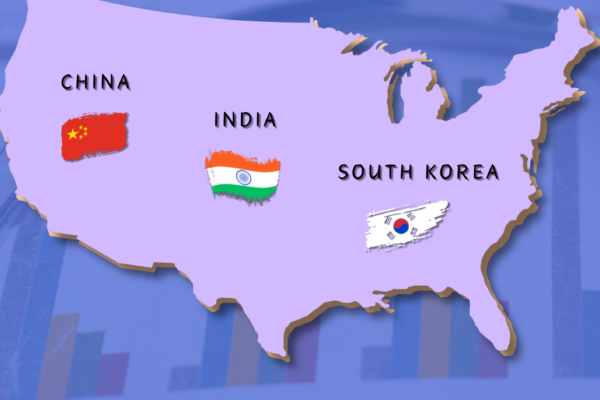
Experiences & Aspirations of Foreign Students in the USA
Experiences and perspectives of students from China, India, and South Korea studying in universities across the United States of America.
North Korea recalls documentary about Kim Jong Un’s mother
North Korea has recalled a 2011 documentary that sang the praises of Kim Jong Un’s mother, two sources inside the country told Radio Free Asia, but the move is prompting people to wonder why the country has always maintained a level of secrecy about her identity and background. “Since her biographical information has never been officially stated, the recall on the film is actually raising suspicions,” a resident of the northeastern province of North Hamgyong told RFA Korean on condition of anonymity for security reasons. Most North Koreans don’t know her name – Ko Yong Hui – or that she was born in Osaka, Japan, or that her father, Ko Gyon Taek, managed a military factory in the city prior to the end of World War II. The documentary, titled “Mother of Great Songun Korea,” leaves out all those facts, the sources said. In lieu of her name, the film referred to her as “respected mother” and showed many scenes of her at Kim Jong Il’s side during his official appearances. Screenshot of the North Korea-produced documentary ‘Mother of Great Songun Korea’. (lovepink4200 via Youtube) It was distributed internally to high-ranking officials, government agencies, and the military on VCD, or video compact disc, in 2011, the same year that Kim Jong Il died. “Recently, judicial agencies such as the Provincial State Security Department and the Social Security Department have begun rounding up copies of propaganda materials,” the resident said. “Instructions were given to retrieve and delete documentary films related to the general secretary’s biological mother,” he said, explaining that “Mother of Great Songun Korea” was on the undisclosed list of now-banned materials. The recall was also confirmed by a resident of the northern province of Ryanggang, who told RFA in the now-banned documentary that “Ko Yong Hui, is touted as having ‘accumulated great achievements that brought about a bright future’” for North Korea. Made in Japan Ko was raised in Japan as part of the Korean minority in the country, and in 1962, the family moved to North Korea as part of a repatriation program. In the early 1970s, Ko appeared as a dancer in the Mansudae Art Troupe – a popular group of musicians known for propaganda performances that glorify the state and its leaders. It is not known when she got together with Kim Jong Il, but she is believed to have met him in the early 1970s, and she bore him three children in the 1980s, including Kim Jong Un. Though most sources describe her as having been his mistress, some suggest she may have been his third wife. The government has never acknowledged any marriage between them, however. Screenshot of the North Korea-produced documentary ‘Mother of Great Songun Korea’. (lovepink4200 via Youtube) According to North Korea’s songbun caste system, Ko would be of the lowest caste because she was born in Japan, her father’s job supported the Japanese war effort, and her occupation as a dancer – which would tarnish Kim Jong Un’s image. Ko’s background does not neatly fit the nation’s founding myth that its leaders are descended from the so-called Paektu Line, named after the Korean peninsula’s tallest mountain, which is the setting of many of the Korean nation’s founding myths, including the lore of the Kim Dynasty. Kim’s grandfather, national founder Kim Il Sung is the progenitor of the line, and his first wife Kim Jong Suk – Kim Jong Il’s mother – fought alongside her husband in his guerilla army against Japanese rule prior to and during World War II, giving Kim Jong Il near mythical status as the legitimate son of two popular national heroes. “In the past, previous leaders inherited power based on the purity of the Paektu bloodline and the legitimacy of revolutionary traditions,” the North Hamgyong resident said. “Details about the birth and lives of the leaders as well as their siblings, parents, grandparents and great-grandparents, were made public and promoted as patriotic examples.” Erasing sensitive information? In contrast, Kim Jong Un, due to his mother’s background, could be seen not as a third-generation revolutionary leader, but the illegitimate son of Kim Jong Il’s Japan-born mistress whose father supported the imperialist war effort. Screenshot of the North Korea-produced documentary ‘Mother of Great Songun Korea’. (lovepink4200 via Youtube) If it becomes widely known, that support of imperial Japan could cause problems for Kim Jong Un, Bruce Bennett, a senior researcher at the California-based RAND Corporation, told RFA. “Kim is trying to wipe out anything that would potentially challenge his control of the country,” said Bennett. “So the issue of his maternal grandfather having supported the Japanese I mean that’s something that could really hurt him potentially. “And so that’s part of the history he wants to get rid of,” he said. Bennett said erasing facts about his mother might marginally help his case to stay in power, but it would be more helpful were he to improve the economy and his people’s lives. Screenshot of the North Korea-produced documentary ‘Mother of Great Songun Korea’. (lovepink4200 via Youtube) The lack of available information about Ko is causing residents to question what they have been told about their leader, Kim Jong Un, the Ryanggang resident said. “As the biography of the leader has not been made public even after him having been in power for 12 years, some are raising doubts about the identity of his mysterious birth mother,” he said. “The argument is that if there is no dishonorable family history in the pure Paektu bloodline, there is no reason not to disclose details about her.” Kim Jong Il was able to claim that his hereditary succession was legitimate because of the purity of his lineage to the Paektu bloodline, the second resident said. Kim Jong Un claims the same lineage, but the secrecy appears to be giving people doubts. “Given the actions of the authorities, who are ordering the recall and destruction of copies of the already released documentary film about his mother, people are questioning whether his…

Australian journalist Vicky Xu starts a new life in Taiwan
Vicky Xu, a Chinese-born Australian journalist who was the target of a widespread campaign of online abuse by agents and supporters of Beijing after she exposed forced labor in Xinjiang, is fighting back against Chinese Communist Party propaganda by living her best life in democratic Taiwan, she told RFA Mandarin in a recent interview. Xu, 29, has been learning martial arts and living a quiet life in Taiwan after quitting social media in the wake of trolling by pro-China accounts, who labeled her “anti-China” and “a traitor” as well as circulating fake nude photos of her. “It’s not I who’s the traitor,” Xu said indignantly. “It’s the Chinese Communist Party.” She said the government, who criticized her via state media in the wake of her expose of forced labor in Xinjiang, was betraying its own people. Vicky Xu in Taipei, June 6, 2024.(Lee Tsung-han/RFA) Xu co-authored a report on forced labor in the region that was published by the Australian Strategic Policy Institute, or ASPI, in 2021. Xu has previously also written for both the Australian Broadcasting Corporation and The New York Times. Xu has since reopened some social media accounts, and was drawn to Taiwan because she is unable to go back to China now, and regards it as a relatively safe place from which to stand and face her demons, the traumatic legacy of the online abuse campaign. Since being followed and stalked in Australia in the wake of the ASPI report, Xu said she now reacts with fear when she encounters people of East Asian appearance while out and about, and wanted to live for a while in Taiwan to overcome that phobia. “My main impression since I’ve been living here is that people can live decently, and with dignity,” Xu said, adding that part of the draw was being able to speak Mandarin and eat Chinese food. “It feels like a parallel universe, another China,” she said. “It’s a great place, and people who know me and know what I do respect me, or are even proud of me,” she said. Vicky Xu plays the violin in an undated photo. (Courtesy of Vicky Xu) “There are so many issues in China where the government doesn’t treat people like human beings, and then the people themselves don’t treat each other as human beings,” Xu said. “The situation is very serious, and I think it needs to change.” “Even if people abuse me in China, I still care about their interests, and about their safety,” Xu said. “For me, as a journalist, telling the truth is the most important thing. There’s no point otherwise; I don’t want to waste my life.” ‘Betrayed’ Xu was once a staunch supporter of the Chinese Communist Party, getting the five stars from China’s national flag tattooed on her ankle and posing on Tiananmen Square as a young woman from a small city in the western province of Gansu, a stop on the high-speed railway linking Xinjiang with the northwestern city of Lanzhou. Vicky Xu shows off her tattoo of the five stars from the Chinese national flag in Beijing’s Tiananmen Square. (Courtesy of Vicky Xu) She studied English-language broadcasting at Beijing’s Communications University, before accidentally finding out the truth about the 1989 Tiananmen Square massacre on a trip to Australia, which she describes as a “betrayal” for the young patriot she once was. “I was so shocked because it was a huge example of how the Chinese Communist Party betrayed its own people,” she said. “June 4, 1989, was a huge stain on the history of Communist Party rule.” “The Chinese people are educated to be loyal to the party, and to love the party, but that’s not possible for a normal and logical person … because the party doesn’t love you,” she said. “It just wants to suppress everything, including the concentration camps in Xinjiang and all kinds of human rights abuses.” For Xu, who once bought the party line that the massacre was CIA propaganda, the revelation was a turning point. Vicky Xu testifies on transnational repression by Beijing at the Czech Parliament. Undated. (Courtesy of Vicky Xu) “[It] was the starting point for my political enlightenment, and for my doubts about the legitimacy of Communist Party rule,” she said. She said she secretly visited a number of survivors, family members of victims and former police officers in a bid to understand more about what happened that summer. Xi ruling through his own trauma Eventually, Xu dropped out of her broadcasting degree and went to Australia to study politics instead. Since then, she has come to an understanding of the Communist Party under Xi Jinping as the product of multiple generations of trauma. Vicky Xu entertains guests with her stand-up comedy routine. (Courtesy of Vicky Xu) “I really think Xi Jinping is ruling the country through his trauma, because very controlling people are usually acting from a deep sense of fear,” Xu said. “During the Cultural Revolution, his father was put in prison and his step-sister committed suicide, while Xi was ostracized by the rest of the offspring of party leaders and locked up in the party school.” “When he escaped and ran back home to get something to eat from his own family kitchen, his own mother reported him to the authorities,” she said. Xi should be getting psychotherapy, she said, but that nobody would dare to offer it to him. Xu has even made these ideas into a stand-up comedy routine about “giving Xi Jinping a hug,” that she performs from time to time. Death threats Yet Xu still has times when she feels isolated, and remains vigilant for any sign of surveillance or harassment from supporters of Beijing, following her experiences elsewhere. “I have received threats of death and sexual violence,” she said. “I had people standing guard in front of my home, and even intruding into the house to take pictures for no reason.” Vicky Xu speaks to RFA Mandarin, June 6, 2024.(Lee Tsung-han/RFA) “When…
China sends glacial water from Tibet to the Maldives, raising concerns
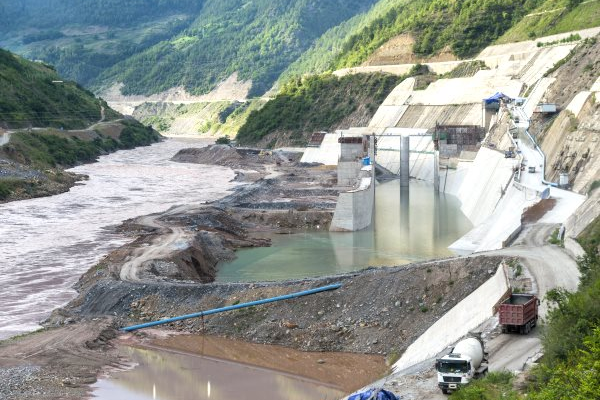
China gifted 3,000 metric tons of Tibet’s glacial water to the island nation of the Maldives in two separate batches in March and May — the same months it unveiled and implemented water conservation regulations at home. The Water Conservation Regulations set limits on water usage within administrative regions and prioritize water conversation work in Tibet and other parts of China. They were issued by China’s State Council on March 20, a week before it sent the first delivery of 1,500 metric tons of water in jugs to the Maldives, which is experiencing a scarcity of fresh water. The regulations then went into effect on May 1, weeks before China donated the second batch of water jugs. China finalized the deal with the Maldives during a November 2023 visit by Yan Jinhai, chairman of the Tibet Autonomous Region, to the low-lying archipelago threatened by rising sea levels. The Maldives has forged strong bilateral relations with China and is a beneficiary of the Belt and Road Initiative, under which it has borrowed more than US$1 billion from Chinese banks in the past decade, according to Western think tanks. Maldivian President Mohamed Muizzu signed 20 agreements, including one for financial and military assistance, with Beijing during his inaugural state visit to China in January 2024. The Maldives thanked the people of Tibet for their “generous donation,” which it expects will greatly support its island communities. Its freshwater resources are affected by erratic rainfall patterns and rising sea levels. Water shortages in Tibet But Tibetans inside Tibet said they face water shortages themselves because Chinese authorities have implemented systematic water conservation and management campaigns across various Tibetan villages and towns for over a decade. This has occurred while authorities have restricted the availability of water and set limits on water usage at the local level. “I have heard that China is donating bottled water from Tibet to other parts of the world for free for political gain,” said one source from the Tibet Autonomous Region, where Chinese authorities have carried out water conservation campaigns for over a decade. “However, in Tibet, the local Tibetans do not have enough drinking water,” he said. “At times there isn’t enough water to even brush our teeth.” On March 27, the same day the Maldives said it received the first batch of water, the Water Conservancy Bureau of Ngari Prefecture, or Ali in Chinese, the birthplace of key South Asian rivers, began a series of year-long events for the general public to promote water conservation. In Nyingtri city, or Linzhi in Chinese, authorities have implemented the strictest water resources management system over the past several years and boast of its effectiveness. “The water used to wash rice and vegetables can be used to mop the floor and water the flowers. … Nowadays, water-saving behaviors like this have become a conscious action of many citizens,” said a 2023 announcement by the city government. Meanwhile, Tibetans who have grown up on their ancestral land in Gangkar township in Dingri county, called Tingri in Chinese, are being forced to relocate to make way for the expansion of China’s water bottling facilities and industry, two sources said. “Gangkar is known for its fertile pastureland and significant water resources from glaciers with 15 water springs in the region, which the local Tibetans have always relied on for their livelihoods,” said the first source. Chinese authorities plan to move about 430 residents to take control of the water resources from the land, he said. Weaponizing water China’s move signals it is engaging in “water politics” and playing the long game for geopolitical gains in South Asia, experts said. The Chinese government has projects underway to extract clean, clear and mineral-rich water to support the expansion of its premium mineral bottled water industry, they said. Beijing also wants to control water flows to lower riparian states such as India, Nepal, Bhutan, Bangladesh, Thailand, Vietnam, Cambodia, and Laos, to further its own aspiration of regional dominance, experts said. “The imperative to address the threat of China weaponizing water in Tibet cannot be overstated,” wrote scholars Neeraj Singh Manhas and Rahul Lad in a March report titled “China’s Weaponization of Water in Tibet A Lesson for the Lower Riparian States” in the Journal of Indo-Pacific Affairs. With approximately 87,000 dams built, China poses a historic threat, having already dammed most internal rivers, they add, while calling for proactive measures to implement enduring policies to protect these vital Tibet’s water resources. Tibet is at the forefront of China’s “water wars” in the region, said Anushka Saxena, a research analyst at the Takshashila Institution, a public policy think tank in India. Tibet’s eight major transboundary river systems have the capacity to turn China into “Asia’s water hegemon,” given that their water can be used for both domestic economic and foreign policy-related interests, as well as can be weaponized to cause harm to lower riparian states, she said. “In that light, China’s moves vis-à-vis export of water to Maldives cannot be isolated from the larger approach China is adopting to using Tibet’s water resources,” she added.
