
Category: East Asia
Nguyen Phu Trong left Vietnam’s Communist Party ripe for strongman rule
On July 19, the Vietnamese Communist Party announced the death of its general secretary, Nguyen Phu Trong. The previous day, it announced that Trong, 80, ostensibly the most powerful politician in the country, had been relieved of his duties for health reasons. He had missed several key meetings in recent months, and even when he did attend, he appeared shaky and unwell. He suffered a stroke a few years ago but seemingly bounced back. However, his near-unprecedented third term in office has been cut short. To Lam, the public security minister and promoted to state President last month, will now assume Trong’s duties. Having led the party since 2011, Trong attempted to reinvigorate an institution that, by the early 2010s, had become bogged down by individual rivalries, profit-seeking, and self-advancement. A man rides past a poster for the 13th National Congress of the Communist Party of Vietnam in Hanoi on Jan. 22, 2021. (Nhac Nguyen/AFP) Corruption was so rampant the public was mutinous. Ideology and morality had fallen by the wayside. Pro-democracy movements threatened its monopoly on power. The private sector was not just fantastically wealthy, but desired more political power. But in what condition does Trong leave the institution he sought to fix? Externally, its monopoly on power is safer. It has increased repression of activists and democrats while appeasing the public through its high-profile takedown of the corrupt. The private sector has been constrained, too, so poses no threat to the party’s political authority. The economy has insulated the party from any meaningful repercussions from the West over human rights. ‘Blazing Furnace’ Within the Communist Party, however, Trong leaves behind a mess. Lam, as public security minister, and Prime Minister Pham Minh Chinh, artfully used Trong’s signature “Blazing Furnace” anti-corruption campaign to advance their own interests, effectively purging anyone who might rival them for Trong’s job in 2026. More Politburo members have been sacked than at any time in memory. Two presidents have “resigned” in as many years. The Politburo is now filled mostly with military personnel and securocrats, the only two factions – and sometimes rivals – left with power. Lam, if he does formally become acting general secretary, which the Politburo will have to vote on, is in a prime position to maintain the job in 2026. One imagines he has very different ideas about the nature of the Communist Party than Trong. Early in the anti-corruption campaign, Trong remarked that he did not want to “break the vase to catch the mice.” That metaphor implied that tackling corruption should shield a delicate Communist Party, not smash it to pieces. Vietnam’s President To Lam, front right, and Cambodia’s Defense Minister Tea Seiha, back right, pay their respects in front of honor guards at the Independence Monument in Phnom Penh on July 13, 2024. (Tang Chhin Sothy/AFP) However, in his quest to rid corruption from a corrupt institution, he eroded almost every check the Communist Party of Vietnam had to prevent a supreme leader figure from rising to the top. Trong violated the three major “norms” that the party introduced in the early 1990s. Politburo members were expected to retire at 65, and individuals could only occupy the most senior positions for a maximum of two terms. More importantly, no one person could hold at the same time two of the four most powerful positions: General Secretary, State President, Prime Minister, and Chair of the National Assembly. This “four pillar” (tu tru) system created a form of succession plan. Regular reshuffles and a separation of powers amongst the political elite would prevent the Communist Party from tilting towards dictatorship. Shattering the norms The norms created a structure in which politicians could fight over policies, often brutally, but without the entire apparatus collapsing because of division. There could be a regular rotation between different factions and geographic networks, meaning no one group was ascendant for too long. Hanoi called this “democratic centralism.” Of course, it’s not democracy, but it’s a form of pluralism that, in theory, had prevented the party from descending into dictatorships like North Korea, Cuba, or China under Xi Jinping. Trong broke every one of these rules. Between 2018 and 2021, he held the posts of party general secretary and state president simultaneously, the first person to do so since 1986. (Lam seems likely to repeat that.) Trong passed away during his third term as party chief, the first leader since Le Duan to have that record. He not only constantly had the party flout retirement-age limits for himself – he should have stepped down in 2021, if not earlier – but such exemptions have been handed out like confetti during his tenure. Vietnam’s Communist Party General Secretary Nguyen Phu Trong addresses a press conference after the closing ceremony of the Communist Party of Vietnam 13th National Congress in Hanoi on Feb. 1, 2021. (Manan Vatsyayana/AFP) At the same time, his anti-graft campaign has centralized power among an increasingly small number of Politburo members. Provincial party politics have been purged and constrained to give more power to the central party apparatus. The party dominates the government. The public security ministry is all-seeing. This was always going to happen. How else do you clean up an uncleanable organization in which power flows up and discipline is enforced only by those above you? The campaign increases the necessity of one section of the party to maintain power indefinitely. Who designates what is the true morality and which cadres are truly moral? Well, a certain clique of the party running the anti-corruption campaign In one speech on the theme, Trong urged the party to “strengthen supervision of the use of the power of leading cadres, especially the heads, push up internal supervision within the collective leadership; make public the process of power use according to law for cadres and people to supervise.” The purge is designed to enforce the view that no one has absolute power above the party. Anyone who uses the power must serve the…
A palm reading: Japan’s navigation plan for Pacific waters
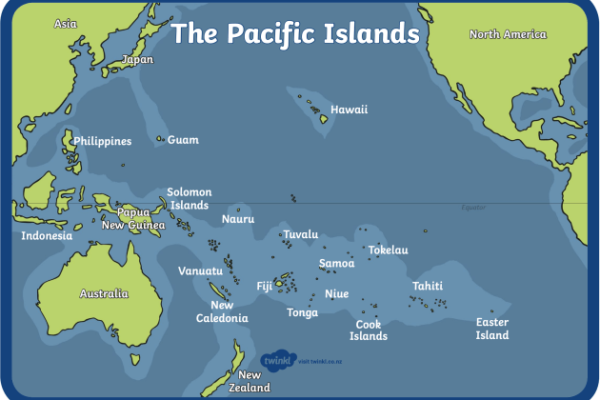
The triennial meeting of the Japanese Prime Minister with the leaders of the Pacific Islands Forum – referred to as PALM – is normally not much of an attention grabber. But this year’s meeting, which has just concluded in Tokyo, makes it clear that Japan is looking to significantly ramp up its presence in the region. This comes on the back of increased bilateral engagement – think new embassies in Kiribati and Vanuatu – and a reinvigorated QUAD with a focus on resource and burden sharing among the membership of the strategic security partnership (Australia, India, Japan, USA). The joint declaration from this their tenth meeting, known as PALM10, with its associated action plan sets out what we can expect from Japanese engagement with the Pacific over the next three years. The use of the seven pillars of the 2050 Strategy for the Blue Pacific Continent as a structure for future engagement is notable. The Blue Pacific concept was developed by Pacific nations as a home-grown framing to address their challenges. Other partners have inserted the term Blue Pacific into announcements and documents. However, this takes the recognition of the Pacific’s own framework to another level. It is particularly significant given that Japan’s former Prime Minister Shinzo Abe coined the term Indo-Pacific, which many in the Pacific islands region have resisted. Secretary General of the Pacific Islands Forum Baron Waqa (L) and Japan’s Prime Minister Fumio Kishida shake hands during the opening session of the 10th Pacific Islands Leaders Meeting (PALM10) in Tokyo on July 18, 2024. (AFP) PALM10 sees a move to an “All Japan” approach to working with Pacific partners. Whilst several Japanese agencies are referenced in the outcome documents, the most notable is the prominence of the Japanese Self-Defense Force in future engagement. Japan’s military impacts in the Pacific islands region are well known and loom large in the regional memory. While the PALM10 action plan references the continuation of activities related to World War II, such as retrieval of remains and clearance of unexploded ordnance, new activities will see the Japanese presence in the region take on a markedly military aspect. This will add to what is an already crowded environment in which defense diplomacy has been increasing in recent years. However, Japan’s use of this strategy has been relatively limited until now. The PALM10 action plan refers to increased defense “exchanges” to consist of port calls by Japanese Defense Force aircraft and vessels. This may not be as easy to achieve as Tokyo officials might like. At the same time as PALM10 was in session in Tokyo, Vanuatu’s National Security Advisory Board refused a request for a Japanese Maritime Self Defense Force vessel to dock in Port Vila. The reasons for the refusal remain unclear. Japan’s Prime Minister Fumio Kishida (C) speaks during the opening session of the 10th Pacific Islands Leaders Meeting (PALM10) in Tokyo on July 18, 2024. (AFP) Other examples of increased use of the JSDF are the provision of capacity building to Pacific personnel for participation in peace-keeping operations and inclusion of a Self-Defense Unit in disaster relief teams to be deployed to Pacific island countries at their governments’ request. At the end of the Action Plan are items for “clarification.” Included in the list (of three) for Japan to clarify are two that continue this push for increased defense diplomacy. They are: a proposal to accept Pacific cadets into the National Defense Academy of Japan and to use the Japan Pacific Islands Defence Dialogue to foster “mutual understanding and confidence building.” The JPIDD has met twice, most recently earlier this year. We are now into the Pacific meeting season and in six weeks the 53rd Pacific Islands Forum Leaders Meeting will convene in Nuku’alofa, Tonga. Japan is a longstanding dialogue partner of the forum. The ongoing review of regional architecture includes revisions to how dialogue partners are selected and accommodated. What was discussed and agreed at PALM10 will play a role in determining where at the Blue Pacific table Japan will sit.
North China Bridge Collapse: 11 Dead, Over 30 Missing
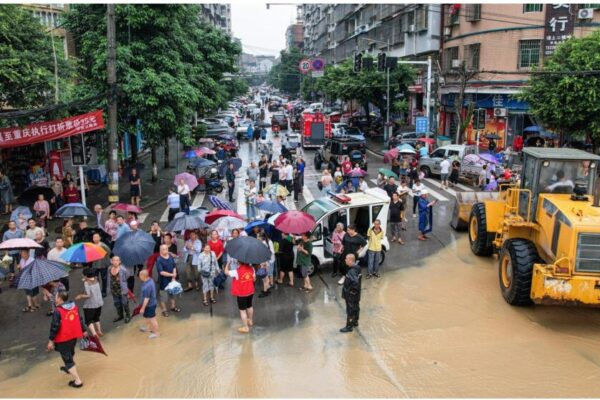
Shangluo, Shaanxi Province – A tragic bridge collapse in northern China has resulted in 11 fatalities and left more than 30 individuals unaccounted for, according to state media reports on Saturday. The incident occurred amidst torrential rains that have been battering the region, leading to flash floods. The bridge, spanning a river in Shangluo, Shaanxi Province, succumbed to the sudden downpour and flash floods at approximately 8:40 PM on Friday (1240 GMT), as reported by the state news agency Xinhua, citing the provincial public relations department. State broadcaster CCTV reported that nearly 20 vehicles and more than 30 individuals remain missing after the highway bridge collapsed into the river below. All 11 confirmed victims were recovered from five vehicles that had been pulled from the water. Images broadcast on state television depicted a partially submerged bridge section with the river coursing over it. A witness, identified by his surname Meng, recounted the chaos as he approached the bridge: “Other drivers started yelling at me to brake and stop the car.” Meng observed a truck ahead of him failing to stop and plunging into the river. Chinese President Xi Jinping has called for “all-out efforts” to locate the missing individuals, according to CCTV. Extensive rescue operations are ongoing as authorities strive to mitigate the disaster’s impact. Widespread Flooding and Damage Northern and central China have been subjected to relentless rainfall since Tuesday, causing extensive flooding and significant damage. Shaanxi Province has been particularly hard-hit, with state media reporting at least five deaths and eight individuals missing due to flooding and mudslides in Baoji city. Television footage has shown entire neighborhoods submerged in muddy waters, with residents and excavators working to clear the debris. Extreme Weather Patterns The semi-desert province of Gansu, neighboring Shaanxi, and Henan Province in central China have also experienced severe rainfall this week. In Nanyang city, Henan, the rainfall volume was equivalent to a year’s worth within just a few days, according to CCTV reports. Additionally, in southwestern Sichuan Province, heavy rains have triggered landslides, resulting in two deaths and seven missing individuals as of Friday, reported by Xinhua. China is experiencing a summer marked by extreme weather conditions, with heavy rains affecting the east and south while much of the north faces successive heatwaves. Scientists attribute the increasing frequency and intensity of such extreme weather events to climate change exacerbated by greenhouse gas emissions. In May, a highway collapse in southern China, following days of rain, resulted in 48 fatalities. Earlier this month, a tornado struck a town in eastern China, causing one death, injuring 79, and inflicting substantial damage. Conclusion The devastating bridge collapse in Shaanxi Province highlights the urgent need for enhanced infrastructure resilience and effective emergency response mechanisms in the face of increasingly volatile weather patterns. The ongoing search and rescue efforts underscore the determination to save lives and support affected communities during this challenging time. For further updates, please refer to state media broadcasts and official announcements.

Hun To went after the press; who really won?
ANALYSIS He is the notorious playboy cousin of Cambodia’s prime minister, and has long been viewed as the family’s fixer for all things they would rather not come into public view. Hun To has reportedly been investigated by Australian police for heroin trafficking; faced questions in connection to threats against the family of slain political analyst Kem Ley, which fled to Australia in 2016 and; in recent years, reporting by Al Jazeera and The Australian newspaper has tied him to cyber slavery, scam compounds and drug smuggling. But in bringing lawsuits against those news organizations, he inadvertently highlighted how Australia – a key regional partner for Cambodia – is running out of patience for the Hun dynasty’s antics. Earlier this month, Hun To scored an apparent victory after he secured an out-of-court settlement over a years-long dispute with The Australian. The outlet agreed to retract a 2-year-old story it had published about Hun To that “some readers may have understood” to have alleged that he “was linked to human trafficking, cyber scams and drug importation,” the paper wrote. “The Australian did not intend to make any such allegations against Mr Hun and accepts his denials of such conduct.” The retraction marked the conclusion of a defamation case Hun To had brought against The Australian in December 2022. It came just after the Australian government had declined to renew his visa, RFA has learned – even though he had spent decades living part-time in the country and he and his family owned extensive business and property interests around Melbourne. While Canberra gave no reason for its decision, Hun To’s lawyers insisted in court complaints seen by RFA that the rejection was spurred by news stories from The Australian and Al Jazeera linking him to organized crime, fraud factories and human trafficking in his native Cambodia. A case launched in parallel by Hun To against Al Jazeera is ongoing. The Qatari state-funded outlet did not respond to a request for comment. Australian libel law is notoriously plaintiff-friendly, particularly in cases where the defendant is a news organization. This growing reputation led the author of a 2019 New York Times op-ed to dub the island nation “the defamation capital of the world.” In Australian defamation cases, the burden of proof uniquely rests with the defendants. No other type of case places such burden on the party being sued. In such a legal environment, defendants run higher risks of losing and incurring hefty damages, and that has often encouraged news organizations to settle out of court. The retraction might have gone little noticed until Hun To’s lawyer, Adam Lopez – who has been known for taking on controversial defamation cases – took to LinkedIn to gloat about his victory. The dispute with The Australian had been “resolved on a confidential basis,” he noted, suggesting that the newspaper had made further concessions beyond the retraction. Cambodia press and social media users quickly picked up the story, with some simply reporting on the retraction and others criticizing The Australian or the Australian court system. With the scrubbing of the controversial story, Hun To enjoyed precisely one day of victory. On July 10, news broke suggesting Hun To’s business interests were neck deep in exactly the type of allegations for which The Australian had just apologized. Elliptic, a financial compliance firm specializing in tracing cryptocurrencies, published a report alleging that a “Cambodian conglomerate with links to Cambodia’s ruling Hun family” had laundered more than US$11 billion for cyber scammers. The name of the company was Huione Pay, and Hun To is one of its three directors. A subsequent report by Reuters found evidence that Huione Pay had processed cryptocurrency worth $150,000 that had been stolen by the sanctioned North Korean hacking collective known as Lazarus. In response to the allegations, National Bank of Cambodia, the country’s central bank, told Reuters that it “would not hesitate to impose any corrective measures” on Huione, although it said so “without saying if such action was planned,” the news agency drily noted. Following the revelations, digital finance company Tether announced that it had frozen $29 million of cryptocurrency held by Huione following a “a direct request from law enforcement.” Whether the latest news make Hun To reconsider going after the press, however, seems unlikely, said Phil Robertson, director of Asia Human Rights and Labor Advocates. Hun To “would be wise to abandon his case since all the dirt has come out on Huione, but he won’t because he’s a shameless, arrogant, rights-abusing tycoon who believes that whatever he does, the ruling Hun family will have his back.” Neither Huione’s nor Hun To’s lawyer had responded to requests for comment as of publication. These allegations are far from the first time Hun To has caught negative publicity. Australian MP Julian Hill spoke in Parliament last March arguing that Hun To and other politically connected Cambodian figures “should never again be granted visas to visit Australia.” His speech charted Hun To’s long and checkered links to Australia, noting that as early as 2003 Australian police had sought to arrest him on suspicion of heroin trafficking. Since then, Hun To and his wife acquired millions of dollars’ worth of property in Australia, Hill added, “with seemingly no legitimate explanation for where their wealth has come from.” “It’s no secret that Hun To has his finger in lots of pies — drug trafficking, illegal deforestation, animal trafficking, illegal gambling,” Hill said. “Most recently, we’ve heard reports he’s dipping his toes into human trafficking, as well. That’s diversifying, isn’t it?”
North Korea’s Kim in military talks with Russian vice defense minister
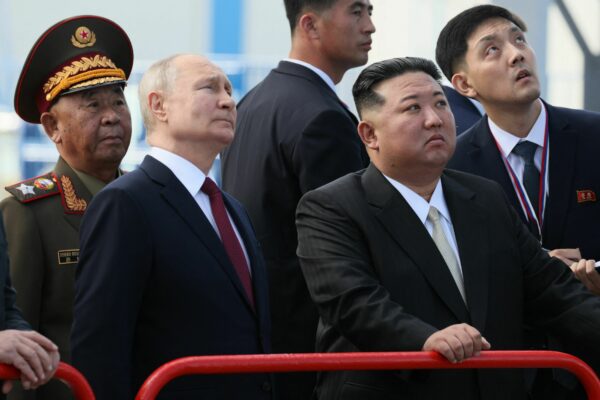
North Korean leader Kim Jong Un has discussed the “importance and necessity” of military cooperation with Russia’s vice defense minister to “defend mutual security interests,” the North’s state media reported on Friday. Kim met a Russian military delegation, led by the vice minister, Aleksey Krivoruchko, in Pyongyang on Thursday, according to the Korean Central News Agency, or KCNA. “The talk shared recognition of the importance and necessity of the military cooperation between the two countries to defend mutual security interests,” the KCNA said. Kim reiterated his firm support and solidarity for Russia’s war with Ukraine and stressed the need for the militaries of the two countries to “get united more firmly” to develop bilateral relations, the news agency added. Krivoruchko is the first known ranking Russian military official to visit North Korea since a summit between Russian President Vladimir Putin and Kim. The two met in Pyongyang for talks aimed at bolstering their economic and security relations and underscoring their shared defiance of Western sanctions. Under a new partnership treaty announced at their summit they agreed to offer each other military assistance “without delay” if either were attacked. Russia has been cozying up to North Korea since Putin ordered the invasion of Ukraine in February 2022. The United States has accused North Korea of sending Russia weapons for use in its Ukraine war but both North Korea and Russia deny that. RELATED STORIES North Korea, Russia agree to offer military assistance if either is attacked North Korea’s Kim hails Russia alliance, promises Putin support on Ukraine Putin arrives in North Korea, vows to boost cooperation and fight sanctions More balloons The military in U.S. ally South Korea resumed propaganda loudspeaker broadcasts toward North Korea in response to the North’s latest launch of trash-carrying balloons into the South. The broadcasts took place from Thursday evening to early Friday in areas near where the balloons were launched, the South Korean Joint Chiefs of Staff, or JCS, said on Friday. Since late May, North Korea has sent more than 2,000 trash-carrying balloons into the South in retaliation for the launch by anti-North Korea activists of balloons carrying propaganda leaflets towards the North. “The military’s response going forward will fully depend on North Korea’s actions,” the JCS said, without providing further details. On Thursday, the JCS said the latest North Korean balloons appeared to be traveling toward the northern part of Gyeonggi Province that surrounds Seoul, advising the public to not touch any fallen balloon and to report them to the military or police. South Korea resumed loudspeaker broadcasts last month as it fully suspended a 2018 inter-Korean military tension reduction agreement in response to the North’s launch of waves of trash-carrying balloons. Edited by Mike Firn.

As Myanmar junta falters, rival ethnic armies jostle in Shan state
The rout of military junta troops and seizure of territory across Myanmar’s border with China has brought the Three Brotherhood Alliance a new struggle in Shan state: dealing with a myriad of actors and shifting alliances seeking to profit from the rapidly changing political landscape. The region’s multiple well-armed ethnic armies include a powerful force that is a de facto ally of Beijing, groups that are aligned with the junta, and other militias with no allegiance to the democratic opposition National Unity Government or the fight to reverse the 2021 military coup. In northern Shan state, insurgent alliance members the Ta’ang National Liberation Army (TNLA) and the Myanmar National Defense Alliance Army (MNDAA) last month launched the second phase of Operation 1027, capturing key military outposts in the country’s largest state. The TNLA’s capture of the last junta camp in Nawnghkio, and its move south into Mogok, will complicate the movement of reinforcements and resupply of Lashio, northern Shan state’s biggest city and a commercial gateway between Mandalay and Muse on the Chinese border. Members of the Ta’ang National Liberation Army and the Mandalay People’s Defense Force stand in front of the captured building of the Myanmar War Veterans’ Organization in Nawnghkio township in Shan state, June 26, 2024. (Mandalay People’s Defence Force via AP) China has put pressure on the alliance to halt the offensive, which started after violations of a cease-fire China negotiated in January. On July 13, the MNDAA announced a unilateral cease-fire would go into effect from July 14-18, out of respect for the Chinese Communist Party, which was convening a Third Plenum session in Beijing, While the two forces remain in positions around Lashio, their offensive has slowed for now. That’s not to say that hostilities have ceased: The junta continues to launch airstrikes. China has been unable to broker a new ceasefire, even though the Three Brotherhood Alliance had sent representatives to nearby Kunming for talks. The MNDAA and TNLA always fight back in self-defense. And with their newly captured Chinese-made anti-aircraft artillery, the two Shan state-based armies have more capacity to target the heavy-lift Mi-17 helicopters the junta uses to resupply and reinforce remote positions. RELATED STORIES Myanmar rebels rack up more gains as Operation 1027 enters new phase Myanmar insurgent allies capture strategic Shan state town from junta Ethnic army overruns junta command center in Myanmar’s Kokang region China awaits junta approval to resume border trade with Myanmar’s Shan state Inroads into Shan regions The turmoil in Shan state has drawn local actors – the United Wa State Army (UWSA) and Shan State Progressive Party (SSPP) – off the sidelines. They are trying to limit the Brotherhood’s gains and exploit the weakness of the State Administrative Council, as the junta is formally known. Tensions between the TNLA and SSPP continue to fester, with both sides accusing the other of instigating attacks. July 13 talks between the two sides in Panghsang aimed at lowering tensions were declared successful by the TNLA. But while these have not escalated into a larger conflict, they’ve resulted in the SSPP not joining the fight against the junta. Indeed, the SSPP, along with the UWSA, seem to be abetting the junta. What we are seeing play out are ethnic loyalties and alliances in the complex Shan patchwork. At over 155,000 square kilometers 60,000 square miles), Shan state is not just the largest of Myanmar’s 14 states and administrative divisions, it makes up nearly a quarter of the total land area. The majority of the six million population are ethnic Shan, with nine other ethnic groups. The TNLA represents the roughly half a million Ta’ang, or Palaung people. The MNDAA is comprised of Mandarin-speaking ethnic Chinese based on the border with China’s Yunnan province. As a result of Operation 1027, the two Brotherhood armies are making significant inroads into ethnic Shan-dominated regions. The state has several ethnic resistance organizations composed of ethnic Shan, including the SSPP and the Restoration Council of Shan State (RCSS). But they are bitter rivals and with limited manpower, equipment, and resources, and neither army controls a contiguous area, making a political map of central and southern Shan State look like a patch of leopard spots. Most of the armed groups in the region have been highly opportunistic and unprincipled. None joined the National Unity Government or picked up arms against the regime. All three groups have benefited from the insecurity caused by the coup, which allowed them to focus on their illicit business activities, including the production, sale, and/or taxation of methamphetamine. The Wa: rested and ready After Operation 1027 began last October 27, the SSPP attacked its rival the RCSS, on the grounds that it remained a National Ceasefire Agreement partner of the junta. While it was hoped that the SSPP would join Operation 1027, their limited operations against the junta’s ally last year was accepted as sufficient for the time being. The SSPP seemed to pledge support for the second phase of Operation 1027, but its tensions with the TNLA have put that on hold. In a surprise move, the United Wa State Army has started to move well outside of its Kokang autonomous region, centered on the border crossing to China at Panghsang (Pangsang). The UWSA captured the mountain town of Tangyan, which is 135 km (85 miles) south of Lashio, without firing a shot, then continued west and took Mongyai. There are now reports that the UWSA have moved west all the way to the Salween (Thanlyin) River – leading observers to ask, what’s going on? With 20-30,000 men, the UWSA, which grew out of the wreckage of the Communist Party of Burma, is one of the largest and best armed ethnic resistance organizations. Ostensibly an ethnic Wa organization, today its leaders are all Mandarin-speaking ethnic Chinese, and the group is seen as Beijing’s closest proxy. They’ve had autonomy since 1989. United Wa State Army soldiers march during a military parade in the town of Panghsang, April 17, 2019….

Anti-junta forces capture camps in central Myanmar township
An anti junta group in Myanmar’s Mandalay region is continuing to make gains in a key township following the collapse of a truce between insurgent armies and the military who seized power in a 2021 coup. The Mandalay People’s Defense Force, or PDF, captured a junta camp at the Alpha cement factory in Madaya township on July 14, and one at Taung Ta Ngar two days later, it said in a statement on Tuesday. Madaya is just 30 km (19 miles) north of Mandalay, the capital of the region and Myanmar’s second-largest city. The Mandalay PDF has been fighting alongside the Ta’ang National Liberation Army, or TNLA, since late October 2023. The TNLA, which has also teamed up with the Arakan Army and Myanmar National Democratic Alliance Army as part of the Three Brotherhood Alliance, pushed back junta forces in several regions before agreeing a shaky China-brokered truce with the junta in January. When the ceasefire collapsed on June 25, the TNLA attacked Mandalay’s Mogoke township and several towns in Shan state to the region’s east, while the Mandalay PDF focused much of its attention on Madaya and Singu townships in Mandalay region. The defense force said it had captured 28 junta camps as of Wednesday. Weapons and ammunition seized after Mandalay PDF captured the junta base at the Alpha cement factory in Madaya township, Mandalay region in a photograph released on July 16, 2024. (Mandalay PDF) Mandalay PDF spokesman Osmon, who goes by one name, told Radio Free Asia Myanmar’s military suffered heavy losses in the battle for Madaya. “There were many casualties on the side of the junta in these operations. We have seized corpses and arrested junta soldiers,” he said. “There were some casualties on the side of Mandalay PDF.” Osmon didn’t disclose the numbers of casualties on either side but said the PDF took more than 150 prisoners. He added the group is now engaged in a fierce battle with junta forces at Madaya’s Kyauk Ta Dar base. RELATED STORIES Myanmar junta steps up security in Mandalay as fighting spreads across region Thousands stuck between checkpoints on Myanmar road amid renewed fighting Thousands displaced in Myanmar’s Mandalay region On Tuesday, three people were killed when a shell hit Madaya town, close to its train station and main market. “It happened around 8 a.m.,” said a resident who didn’t want to be named for fear of reprisals. “A 44-year-old woman, a 30-year-old woman and a two-year-old girl were killed.” The man said he didn’t know which side had fired the shell, while another resident said the blast happened close to where junta troops were stationed. “It was about 10 to 14 meters away from them,” he said, also requesting anonymity for security reasons. “It was also close to where the junta soldiers always come to drink tea.” RFA phoned the junta spokesman for Mandalay region, Thein Htay, for details on the fighting in Madaya, but he did not answer calls. The National Unity Government, a shadow government formed by members of the civil administration ousted in the 2021 coup, said on June 27 that PDFs and their allies have made sweeping gains in Mandalay region and Shan state to the east, in a campaign it dubbed “Operation Shan-Man.” The Mandalay PDF said it had captured 11 junta camps in Singu township, 80 km (50 miles) north of Mandalay city, by July 7. Now the junta is fighting back, damaging around 100 houses and injuring more than 20 people in airstrikes on July 16, as it seeks to flush PDF forces out of Singu town. The PDF’s Singu-based head of information, Than Ma Ni, said the junta carried out more than 20 airstrikes on Tuesday and also bombarded the town with heavy artillery. “The junta’s air force has been striking all day as Mandalay-PDF has taken over Singu town,” he said Wednesday. “There were no deaths, but those who were hit by shrapnel have been moved to a safe place and are receiving medical treatment. The entire town was pretty much destroyed.” Translated by RFA Burmese. Edited by Mike Firn and Taejun Kang.
Myanmar junta steps up security in Mandalay as fighting spreads across region
Junta forces have tightened security in Myanmar’s second-biggest city, Mandalay, while shelling civilians elsewhere in the region, after coming under renewed attack from an alliance of insurgent forces battling to end military rule. A shell killed a seven-year-old boy and a woman in her 30s after it exploded in a residential area of Mandalay region’s Mogoke town on Monday evening, residents told Radio Free Asia Tuesday. Another four-year-old girl and a 60-year-old woman, as well as a woman and man both in their 30s, are in critical condition, said one Mogoke resident, asking to remain anonymous for security reasons. “A child and a grandmother were seriously injured by shrapnel that hit them in the neck,” he said. “It was not easy to send them to the hospital, so they were treated at home by people who have some medical knowledge.” The shells were fired from a junta camp on Strategic Hill in eastern Mogoke, a ruby-mining town about 200 km (120 miles) north of Mandalay city. Over half the town’s population has fled after fighting intensified between junta troops and the Ta’ang National Liberation Army, or TNLA, which has taken control of western Mogoke, residents said. RELATED STORIESMyanmar rebel army calls ceasefire after junta airstrikeThousands stuck between checkpoints on Myanmar road amid renewed fightingMyanmar insurgent allies capture strategic Shan state town from junta The TNLA is part of an alliance of three ethnic minority insurgent forces known as the Three Brotherhood Alliance. The alliance launched an offensive last October, codenamed Operation 1027 for the date it began, and pushed back junta forces in several regions. After a five-month ceasefire ended on June 25, the TNLA, and allied forces attacked junta camps in Madaya, Singu and Mogoke townships in Mandalay region, and Hsipaw, Kyaukme, Nawnghkio and Lashio towns in Shan state to the east. Stepping up Security The TNLA and its allies have also turned their attention to junta bases near Mandalay region’s capital, causing the military to step up security in Mandalay city, residents said. One city resident, who wished to remain anonymous for fear of reprisals. told RFA that after Operation 1027 resumed in late June, the junta had increased the number of outposts around Mandalay and its historic palace. “We’re getting a sense that the areas around the palace are more secure. They also installed heavy weapons on top of Mandalay Hill and also on Yankin Hill,” he said. “Security has been increased a lot. If there was a place with four or five soldiers before, there are about 10 soldiers now.” Troops are also stationed on top of high-rise buildings in the city’s Chanmyathazi township, one resident said, also asking for anonymity to protect his identity. “The junta troops are stationed on the top floors of Ma Ma-29 and No. 49 buildings,” he said, adding that soldiers also occupied buildings in the Myayenanda, and Aungpinlel neighborhoods, as well as Mandalay’s industrial zone. “The troops asked residents to leave in order for soldiers to be stationed there.” Army personnel are also stationed in Inwa (Inn Wa) town, 32 km (20 miles) south of Mandalay city, which is close to a junta air force base, he added. On Monday, the junta closed the Mandalay-Madaya Road after fighting with allied rebel forces near Madaya township’s Kyauk Ta Dar village, which is just 27 km (17 miles) away from Mandalay city. According to the Mandalay People’s Defense Force, the group had captured 25 junta camps in Madaya township and 11 in Singu township as of July 7. RFA called Mandalay region’s junta spokesperson Thein Htay for more information on increased security and the attack on Mogoke, but he did not answer phone calls. Translated by RFA Burmese. Edited by Kiana Duncan and Mike Firn.
‘People’s court’ issues arrest warrant for Xi Jinping
A citizens’ tribunal has issued a symbolic arrest warrant for Chinese President Xi Jinping after issuing a nonbinding verdict that he committed crimes of aggression against Taiwan, crimes against humanity in Tibet, and genocide against Uyghurs in Xinjiang. The Court of the Citizens of the World — a “people’s court” dedicated to universal human rights and based in The Hague, the Netherlands — issued the arrest warrant on July 12 after four days of hearings, which included expert witness testimonies and victim accounts. Members of the China Tribunal included Stephen Rapp, former U.S. ambassador-at-large for war crimes issues; Zak Yacoob, a retired judge who served on the Constitutional Court of South Africa; and Bhavani Fonseka, constitutional lawyer and human rights lawyer and activist in Sri Lanka. RELATED STORIES Uyghurs mark 2 years since ‘genocide’ finding Uyghur Tribunal finds China committed genocide in Xinjiang Uyghur Tribunal wraps up in London with eye on December ruling on genocide allegations Uyghur Tribunal determination could change paradigm for China relations: experts Experts and witnesses detailed widespread human rights abuses in Tibet and Xinjiang, including intrusive surveillance, repression, torture and restrictions on free expression and movement, as well as what they described as efforts to eradicate their distinct cultural and religious identities. Some witnesses were survivors of mass detention camps in Xinjiang, where torture and the forced sterilization of Uyghur women occurred. Though the unofficial body has no legal powers, its proceedings highlighted the plight of aggrieved parties and provided a model for prosecution in international or national courts under the principle of universal jurisdiction. The court said it “obtained sufficient legal grounds” for Xi’s arrest on the charges laid out against him and called on the international community to support its decision, though it is unclear how governments will react. Judge Zak Yacoob (L) speaks with presiding judge Stephen Rapp during the China Tribunal at the Court of the Citizens of the World, in The Hague, the Netherlands, July 12, 2024. (Court of the Citizens of the World via YouTube) “The tribunal’s core findings are of significant importance, revealing the extent of human rights abuses committed by the Chinese state,” said a report by JURIST, a nonprofit news organization that highlights rule-of-law issues around the world. There was no immediate response from the Chinese government. Former prisoners speak Former Tibetan political prisoners, including Dhondup Wangchen and Tenpa Dhargye, recounted the torture they experienced in Chinese jails and the impact of China’s repressive policies in Tibet. Tibetan filmmaker and human rights activist Jigme Gyatso, also known as Golog Jigme, who has been jailed by Chinese authorities on at least three occasions, highlighted Xi Jinping’s efforts to completely eradicate the use of Tibetan language and culture. He also outlined what he said was the systematic torture and persecution of political prisoners after their release and the coercive control of Tibetans’ movements in greater Tibet. Gulbahar Haitiwaji, a Uyghur former internment camp detainee who now lives in France, testified before the tribunal about being chained to beds and tortured in Xinjiang. She told Radio Free Asia that she felt immense excitement when called upon to testify, seeing it as a crucial opportunity to speak for the hundreds of thousands of Uyghurs who endured China’s concentration camps. “Back then, while in the camp, I often wondered if there was any justice in the world capable of punishing those responsible for our people’s suffering,” she said. The Chinese government tried to dissuade some Uyghurs from providing testimony in The Hague. Abdurehim Gheni, a Uyghur activist who now lives in the Netherlands, said Chinese police contacted him via Telegram, a WeChat-style communication app banned in China, as recently as two days before he was scheduled to appear before the court. The police also had his brother leave voice messages telling him not to attend the hearing, he said. Judges Bhavani Fonseka (L) and Zak Yacoob (C) and presiding judge Stephen Rapp hold court during the China Tribunal at the Court of the Citizens of the World in The Hague, the Netherlands, July 12, 2024. (Court of the Citizens of the World via YouTube) Gheni recounted that his brother said: “Do not do anything against the government. If you return here, the government will be lenient on you. We can also go there to see you.” The tribunal reported that it faced attempts to shut it down in the form of a phony cease-and-desist order, and said a spy disguised as a legal volunteer provoked staff and other volunteers to resign, JURIST reported. ‘First meaningful step’ Abduweli Ayup, a Uyghur rights activist and researcher based in Norway, who also testified at the China Tribunal, said the verdict holds significant importance for Uyghurs. “It’s the first meaningful step to stop the Uyghur genocide,” he said. “The court has completed the accusation against the perpetrator and judged at the trial. The verdict implicates the criminal, Xi Jinping. He should be arrested and punished,” he said. In December 2021, an independent, nonbinding Uyghur Tribunal in London found that China committed genocide against Uyghurs in Xinjiang and that Xi Jinping shared primary responsibility for the atrocities. Though the panel had no state backing or power to sanction China, its conclusion added to the growing body of evidence at the time that Beijing’s persecution of Uyghurs constituted a crime against humanity that deserved an international response. In February 2023, the Court of the Citizens of the World issued an indictment against Russian President Vladimir Putin for the crime of aggression in Ukraine and called for his arrest. A month later, the International Criminal Court issued an arrest warrant for Putin along with Maria Lvova-Belova, Russia’s commissioner for children’s rights, for alleged war crimes involving accusations that Russia had forcibly taken Ukrainian children. Additional reporting by RFA Mandarin. Translated by RFA Uyghur and RFA Tibetan. Edited by Roseanne Gerin and Joshua Lipes.
China’s Communist Party set to open key policy meeting amid economy worries
Top members of the ruling Communist Party of China will gather Monday to discuss ways to lift the world’s second-biggest economy out of its post-COVID slump and reduce dependence on technology from its geopolitical rival, the United States. The four-day, closed-door meeting, chaired by President Xi Jinping, is expected to unveil tax system revisions and other debt-reduction measures, steps to deal with a massive property crisis, and policies to boost domestic consumption, policy advisers have said. Previous third plenum sessions of the Chinese Communist Party Central Committee – more than 300 full and alternate members – have unveiled policy initiatives for the next five to 10 years. Some have announced significant shifts. Residential buildings under construction by Chinese real estate developer Vanke in Hangzhou, in eastern China’s Zhejiang province, March 31, 2024. (AFP) The 1978 plenum launched Deng Xiaoping’s historic economic reform and opening policies, while the 1984 event confirmed the reform direction in the face of resistance. The 1993 gathering pledged a recommitment to market economic reforms after the clampdown following the Tiananmen massacre. The 12 years of the Xi Jinping era have put the brakes on market reforms as Xi consolidated power in the party, analysts said. Xi’s third plenum 2013 “laid out a series of economic reforms, most of which have not succeeded, most of which have not been carried through,” said Barry Naughton, the So Kwan Lok Chair of Chinese International Affairs at the University of California San Diego. “So everyone is very curious and puzzled to see what this new third plenum is going to bring,” he told Radio Free Asia Mandarin. The previous plenum, 2018, saw Xi further consolidate power with the scrapping of presidential term limits. Interventionist policies This plenum, normally held once every five years, was expected last autumn but delayed without explanation until this month. Yu Jie, a senior research fellow on China at Chatham House, a British think tank, said the plans to be unveiled in coming days “are unlikely to be policies eagerly waited and favored by private enterprises and global investors.” Instead of stimulus measures to boost growth, expect “further government intervention to channel economic resources into the strategic and innovation sectors and to guarantee minimum social welfare to the poor,” she wrote on the Chatham House website. RELATED STORIES Chinese police target dissidents, petitioners ahead of plenum China’s jobless struggle amid economic slump China to hold long-delayed plenary meeting to boost embattled economy The Communist Party will introduce two economic slogans during the plenum: “New quality productive force” describing making the Chinese economy a leader in technological innovation, and “new national system” of stronger centralized control allocating capital and resources to sectors with strategic significance,” Yu wrote. “The underlying emphasis here is not on the economy but on geopolitics,” she added. Chinese state media have tried to create an upbeat mood for the secretive gathering Jingxi Hotel in Beijing. “Entering July, Chinese people’s expectations will be running high,” according to a June 30 commentary in the Global Times newspaper, predicting “a holistic package of new reform plans” that is expected from the meeting. “After more than 40 years’ reform and opening-up, Chinese policymakers are becoming both astute and experienced in managing a giant economy like China’s,” it said. Tech war over consumption Naughton said, however, Chinese firms and people are not very bullish. “It’s quite clear that the expectations and household understandings of the economy have deteriorated dramatically since 2022. People have a hard time getting jobs. People’s income growth is slower and they feel much less confident about it,” he told RFA. The International Monetary Fund has said China’s economy is set to grow 5% this year, after a “strong” first quarter, but other economists warned the recovery has been imbalanced in favor manufacturing and exports over consumption. “Xi Jinping clearly wanted the majority of the state’s resources and the majority of the state’s attention to be focused on this technological war with the United States, to wean China off the dependence on technology that has been dominated by Americans,” Naughton said. “He doesn’t care about the rate of growth of consumption of the Chinese people,” he added. An employee counts Chinese yuan banknotes at a bank in Hefei, Anhui province, Nov. 11, 2010. (Reuters) Ahead of the conclave, China is ramping up its “stability maintenance” system, which kicks into high gear targeting those the authorities see as potential troublemakers ahead of top-level meetings and politically sensitive dates in the calendar. Authorities across China are targeting dissidents and petitioners ahead of next week’s key meeting of the ruling Communist Party, placing them under house arrest or escorting them out of town on enforced “vacations,” Radio Free Asia reported this week. Several high-profile activists including political journalist Gao Yu, rights lawyer Pu Zhiqiang and political commentator Zha Jianguo have been targeted for security measures ahead of the third plenary session of the party’s Central Committee, a person in Beijing familiar with the situation who asked not to be named for fear of reprisals said. Reporting by Ting I Tsai. Editing by Paul Eckert.
